
The Tucson Public Art Project- Vol.2
A Spiritual Awakening in Tucson
[portfolio revisions in progress and half way complete]
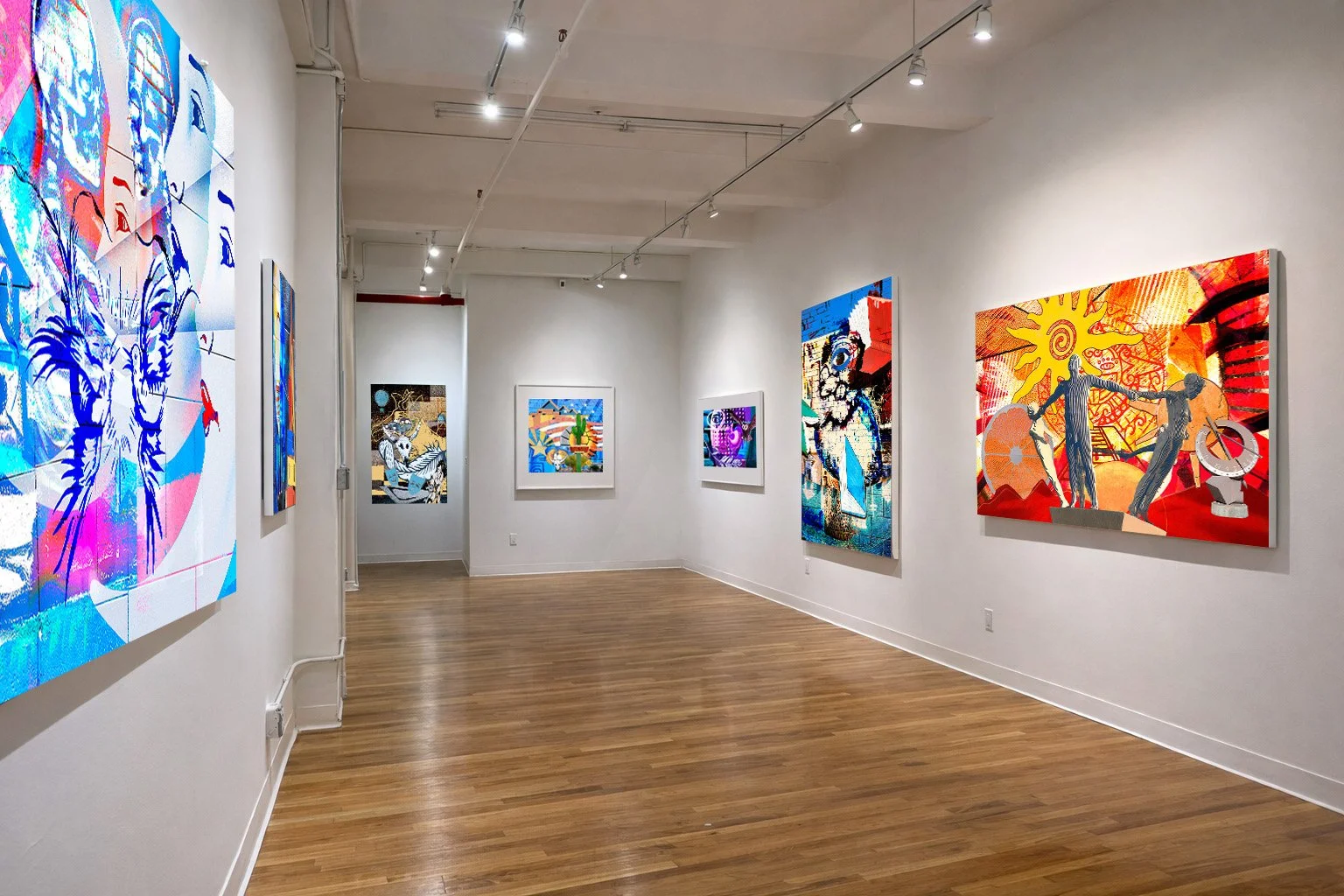
Tucson’s public art is my source material for a doorway to a higher frequency:
I photograph its murals, sculptures, and masonry and then digitally collage them into symbolic, story-rich compositions that speak to those in spiritual awakening. Whether you know these streets by heart or are meeting them for the first time from across the world, the images invite a double recognition—of place and of Self. Indigenous motifs, desert flora and fauna, and the city’s kinetic energy become archetypes of clarity, courage, and compassion, so each canvas serves as both a tribute to Tucson and an educational souvenir or mirror of your inner life and psychological healing. Bring one of these photographic digital collages home to welcome the Old Pueblo’s vitality into your space and to anchor a daily practice of reflection, breath, and self-love.
[Read project bio below.]
3D/5D Split—New Earth Special
Thank You ⋆
11% OFF
⋆ 11% Donated ⋆
Thank You ⋆ 11% OFF ⋆ 11% Donated ⋆
Because your’e the kind of person who says, “Let’s build peace on Earth through practicing peace within—even amidst all the chaos externally”
Enjoy 11% OFF each print offered in this multi-image set. (Prints sold together or separately, excludes single posters.)
Use Code: 5D11:11
I will also donate an additional 11% of every sale to The Alliance for Peacebuilding, a true hero among human rights organizations.
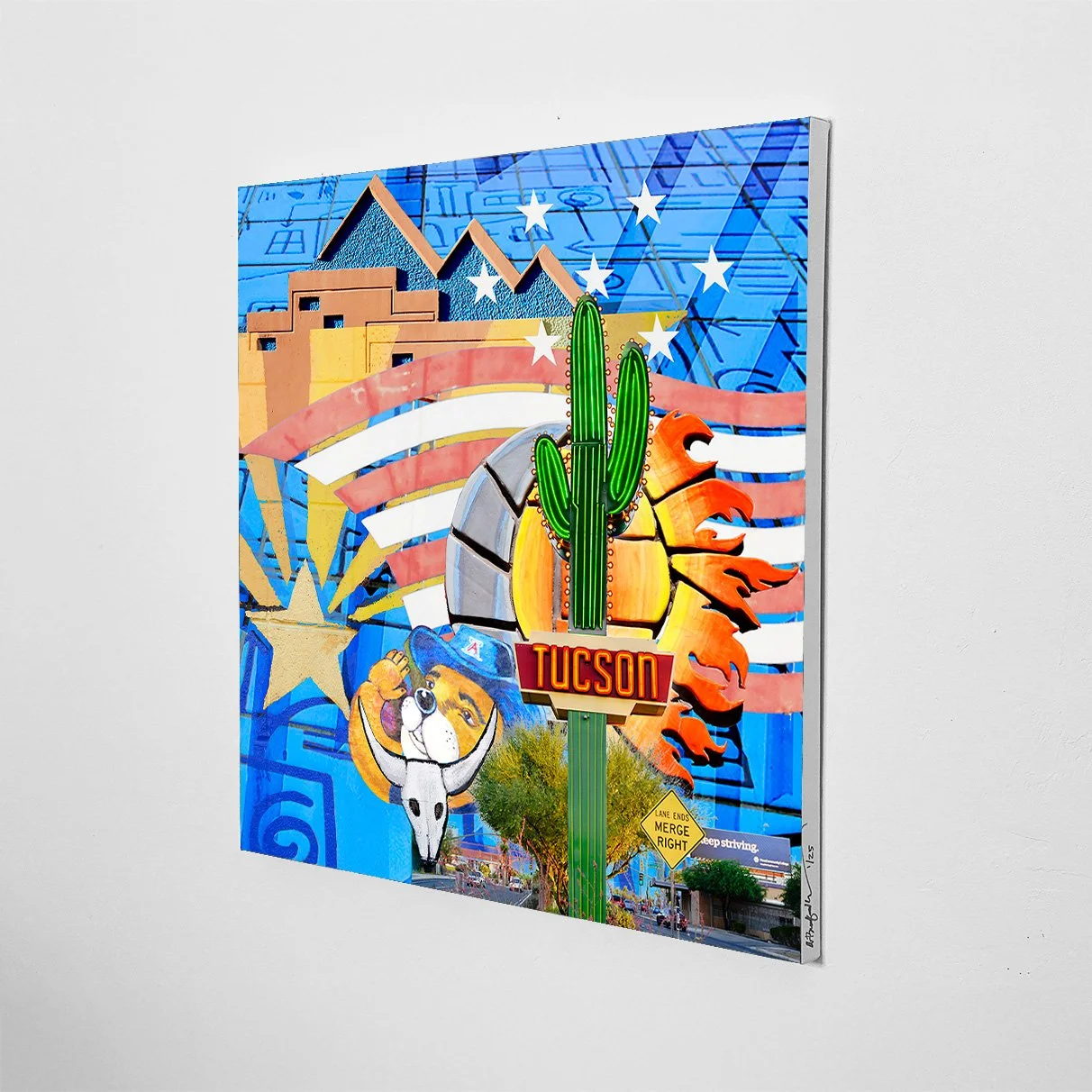




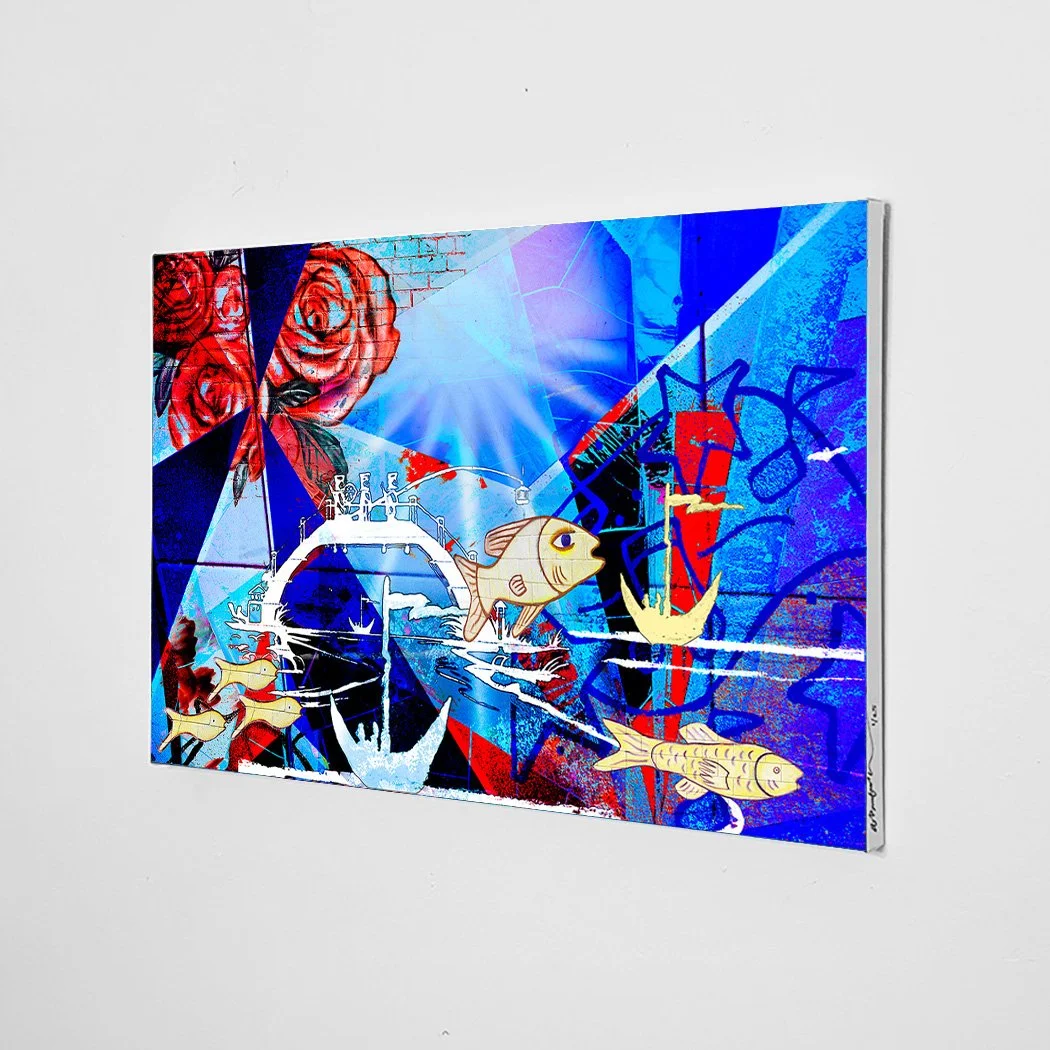



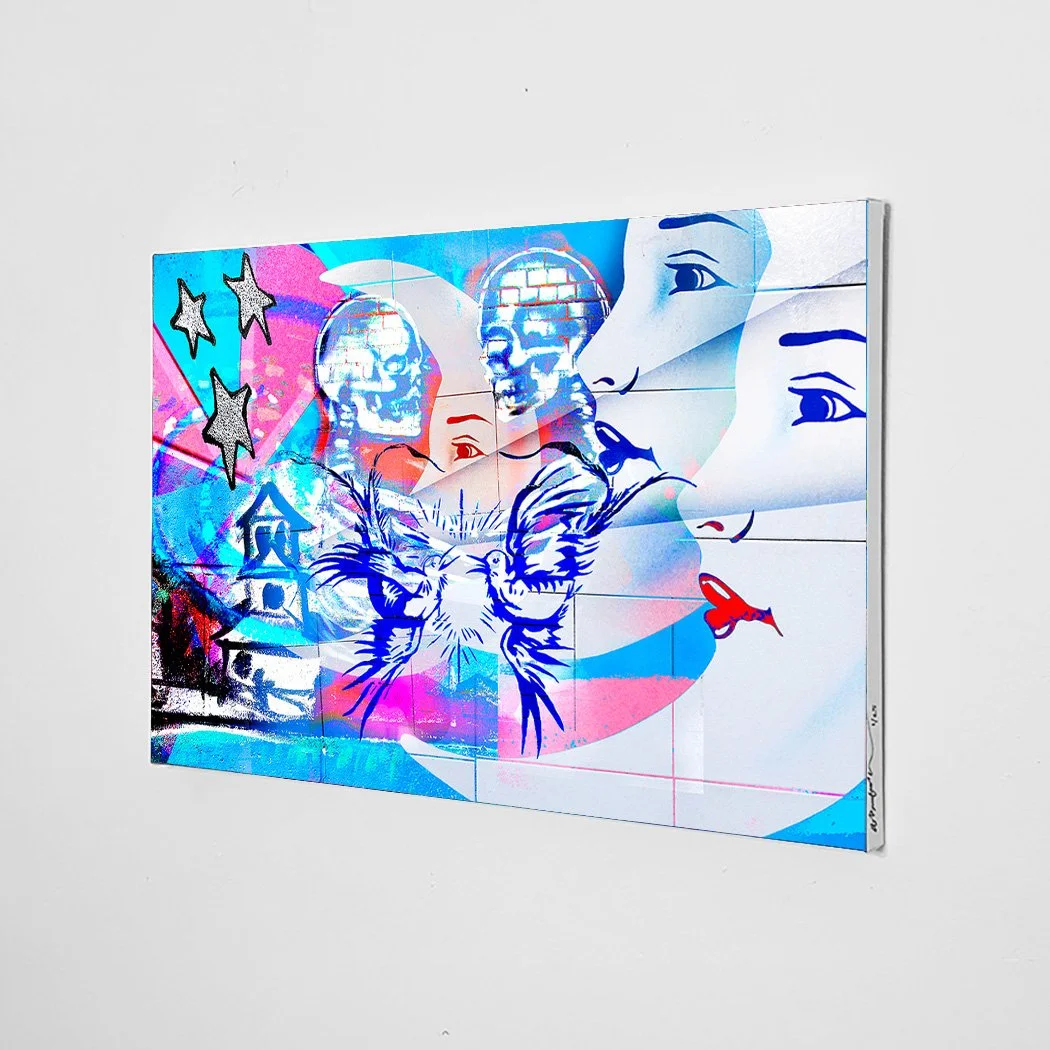

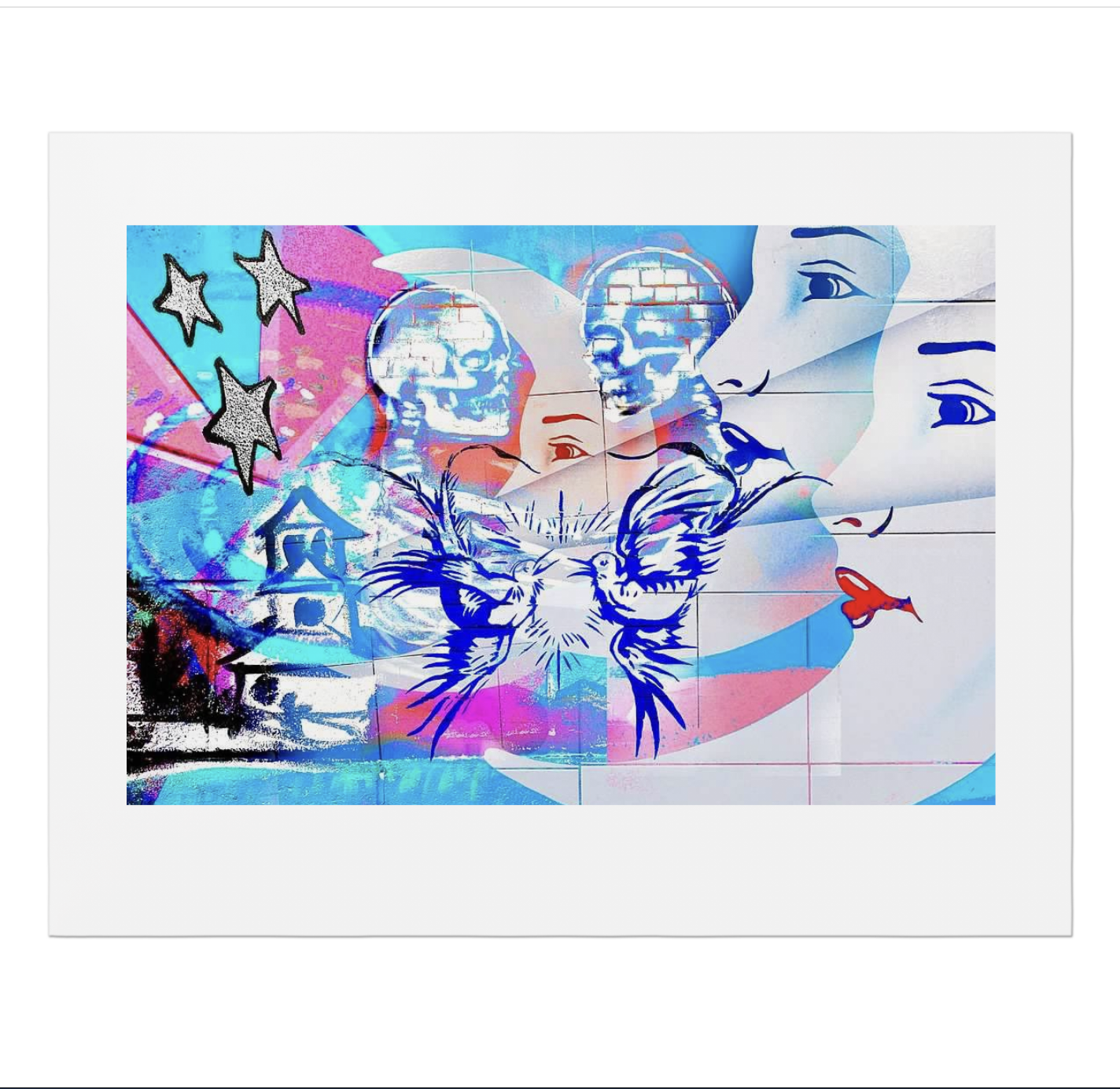


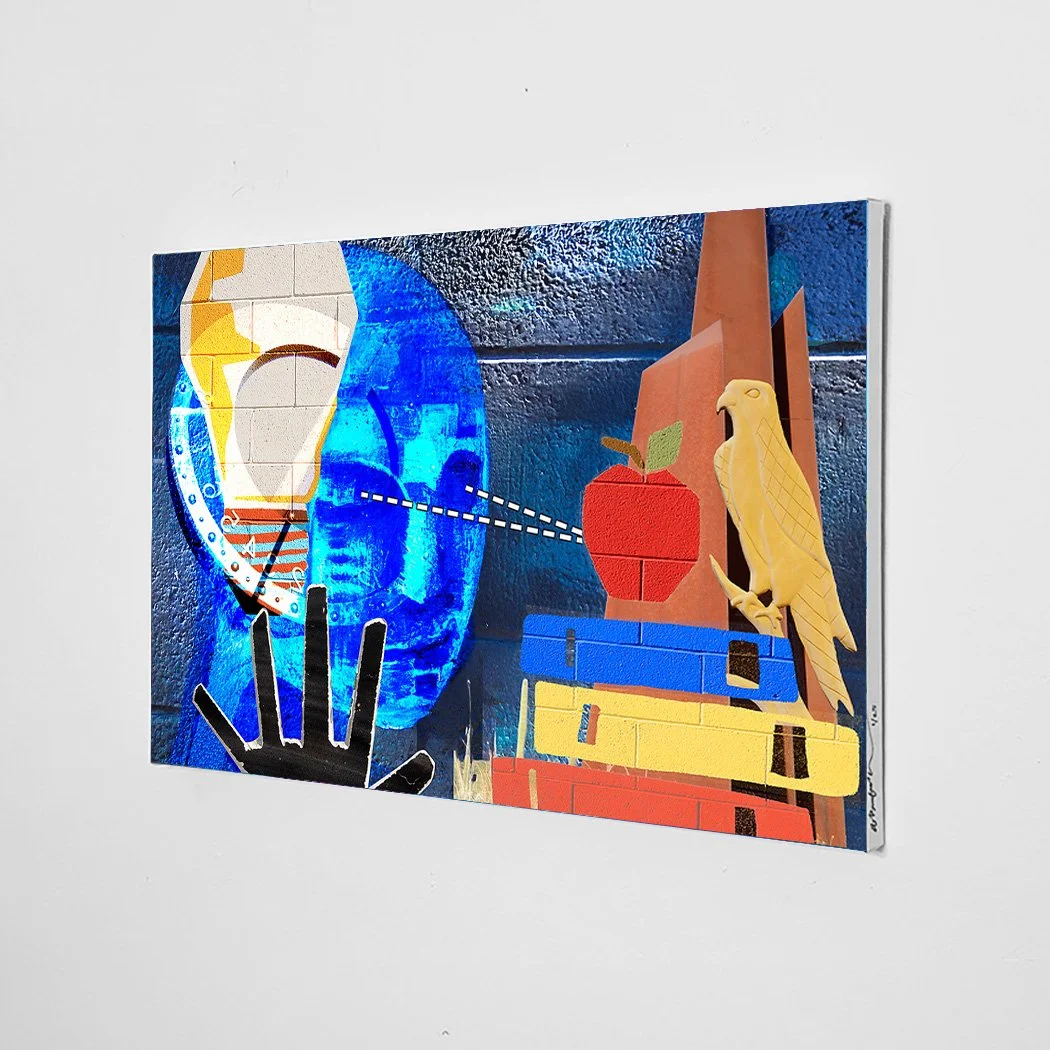
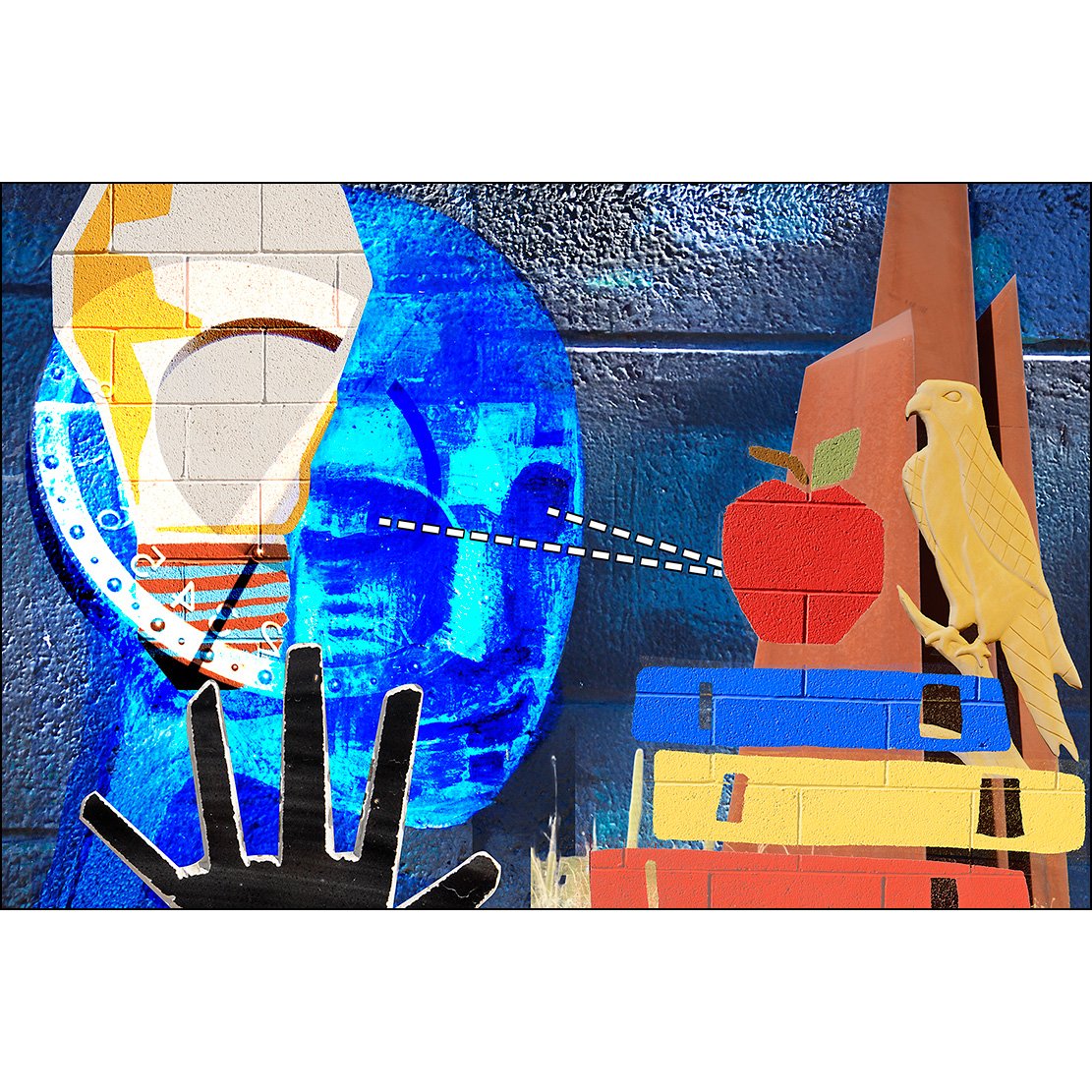


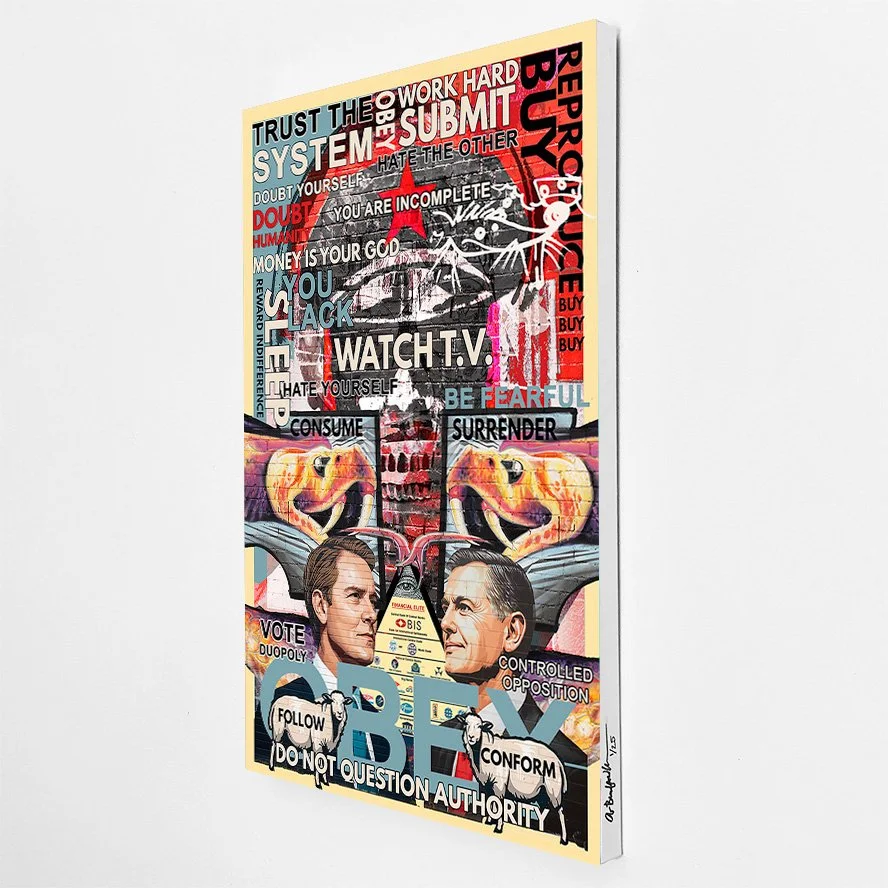



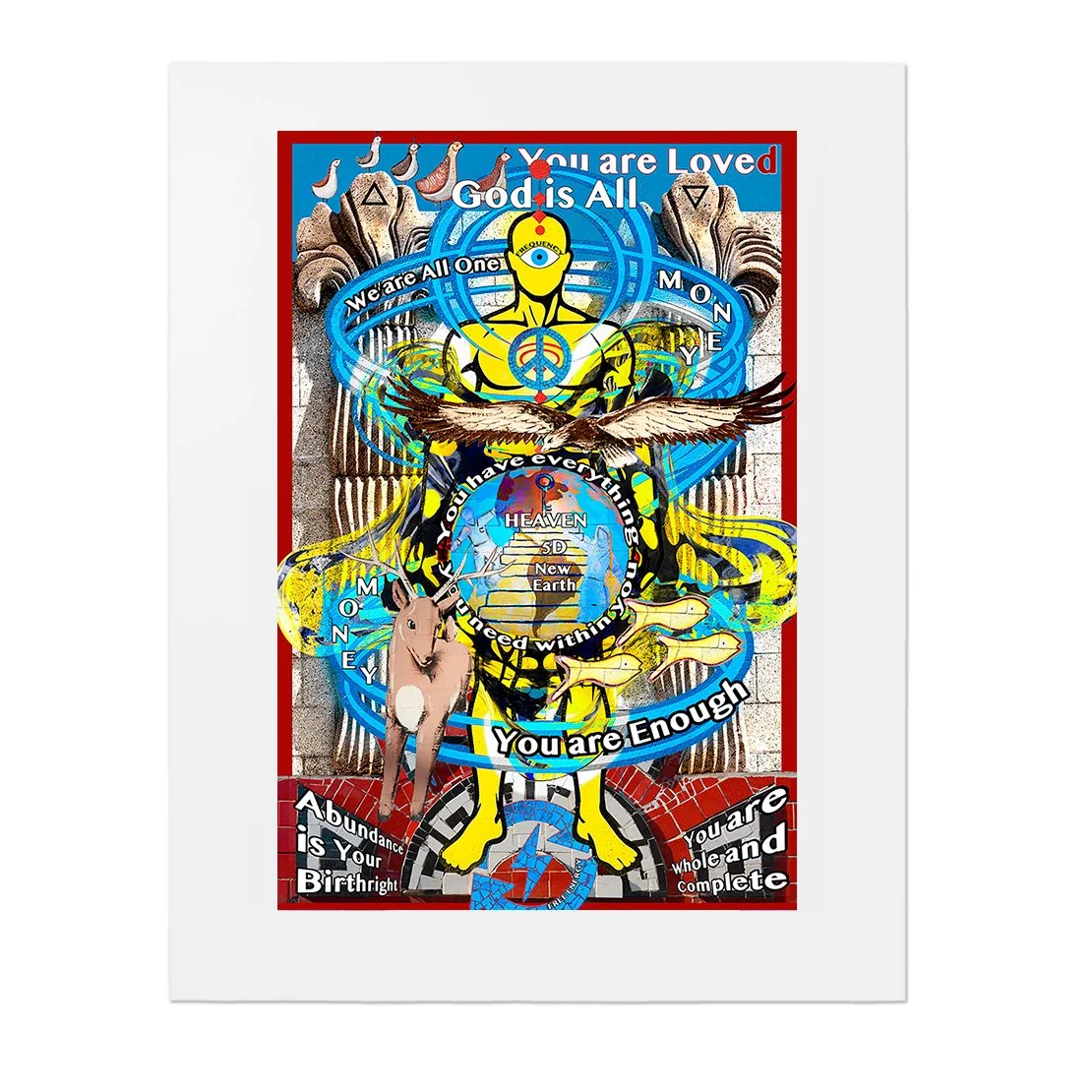


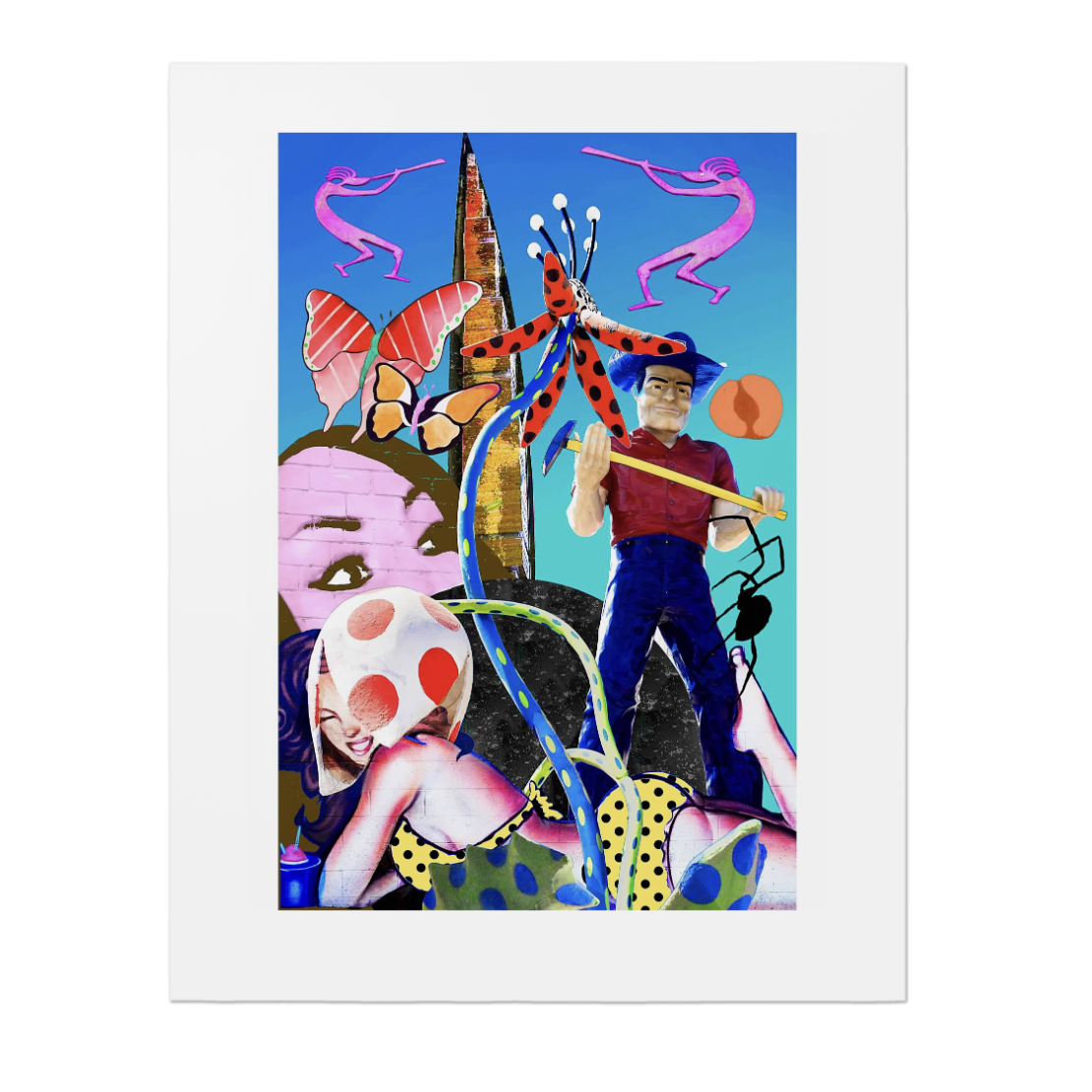


!["Love They Self [Embodiment of the Divine Masculine]” Limited Edition, UV-Curable Pigment Giclée Matte Canvas Print](https://images.squarespace-cdn.com/content/v1/649d1713c71e657c04fc689a/affa4914-0883-481a-b8bd-41aa9dc6fc07/Awakening+Art+with+Bradford+%7C+Tucson+Public+Art+Project+23+Love+They+Self+-+Love+Yourself+Like+Youre+Not+Waiting+For+Someone+Else+To+Do+It+%7C+Canvas+Print++.jpg)

!["Love They Self [Embodiment of the Divine Masculine]” Open Edition, 22x28" Premium Poster](https://images.squarespace-cdn.com/content/v1/649d1713c71e657c04fc689a/ab545624-f7c2-42b9-be52-691fb63fb839/Awakening+Art+with+Bradford+%7C+Arthur+Bradford+Klemmer+%7C+Tucson+Public+Art+Project+24+Love+They+Self+%7C+Premium+Poster.png)
![*Next Piece Coming Soon "Love They Self [Embodiment of the Divine Feminine]” Limited Edition, UV-Curable Pigment Giclée Matte Canvas Print](https://images.squarespace-cdn.com/content/v1/649d1713c71e657c04fc689a/8e7d3c5f-6dd9-4a7a-97da-b10471163867/Comming+Soon.png)
!["Love They Self [Embodiment of the Divine Feminine]” Open Edition, 22x28" Premium Poster](https://images.squarespace-cdn.com/content/v1/649d1713c71e657c04fc689a/9421cb17-588e-44d9-9bea-e3dcefea09bf/Comming+Soon.png)

-
![]()
Know They Self
-
![]()
Internal Resolution
-
![]()
Catharsis
-
![]()
Humility
-
![]()
Inner Child Healing
-
![]()
Abundance is Your Birthright
-
![]()
Power vs Force
-
![]()
Synchronicity
-
![]()
The Healing Process of an Empath
-
![]()
The Alchemical Marriage


About the Project
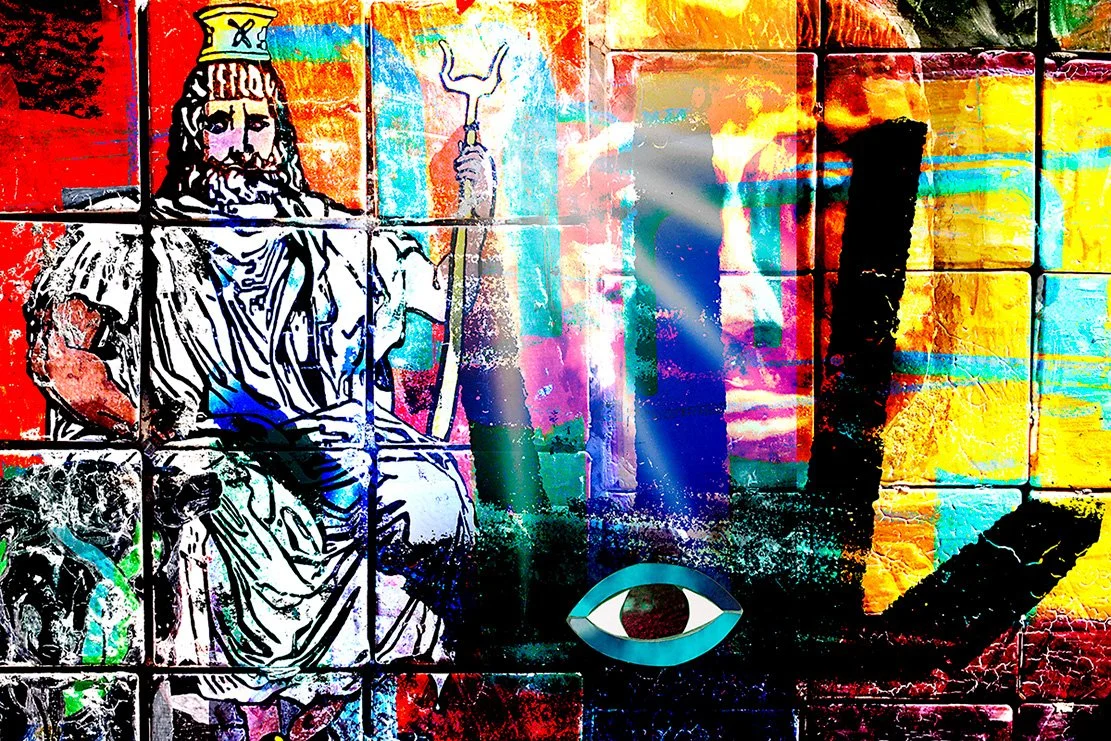
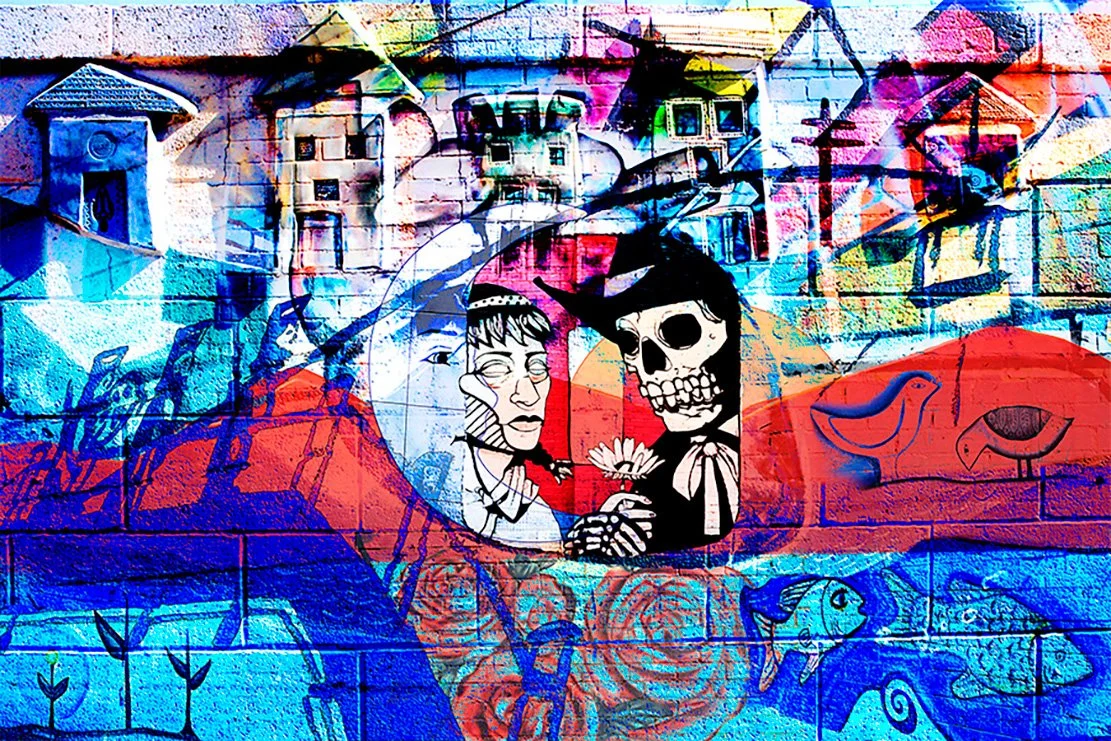
Every city carries an inner psychology hidden beneath its streets, symbols, architecture, and public spaces. The Tucson Public Art Project is my attempt to reveal that invisible landscape through digital collage art — transforming Tucson’s murals, sculptures, freeway installations, decorative masonry, and neighborhood landmarks into visual meditations on self-awareness, healing, and spiritual awakening.
Created from my own photography and reconstructed through elaborate Photoshop collage techniques, this three-volume series celebrates Tucson not only as my hometown but as a living work of art. The project is rooted in the belief that public art has the power to do more than beautify a city; it can mirror the inner life of the people who move through it every day.
From the freeway corridors of Interstate 10 to the symbolic landmarks scattered throughout the Greater Tucson Area and the cultural heartbeat of Downtown, each piece invites viewers to experience Tucson through two lenses at once: the physical landscape of the Old Pueblo and the deeper psychological landscape within themselves.
The result is both a tribute to Tucson’s artistic community and a symbolic journey through perception, identity, transformation, and self-realization.
Volume One — Interstate 10
(Currently Being Revised)
Volume One functions as an arrival sequence into Tucson — as though the viewer has just taken an off-ramp into an open-air gallery stretching across the Sonoran Desert.
Centered on the Interstate 10 corridor running through Pima County, this chapter explores the remarkable public artwork integrated into Tucson’s freeway infrastructure: sculptural retaining walls, mural installations, stamped concrete, ceramic tile mosaics, landscape architecture, and symbolic Southwestern design woven directly into the transportation system itself. Many of these installations were created through collaborations between the Arizona Department of Transportation, Pima County, landscape architecture firms, community organizations, and local artists.
The visual language of the freeway repeatedly returns to themes of desert ecology, Indigenous agricultural symbolism, astronomy, migration, wildlife, neighborhood identity, and cultural memory. Rather than treating infrastructure as anonymous concrete, Tucson transformed its freeway system into a reflection of regional identity and spiritual atmosphere.
This volume explores not only the intended meanings of these works but also the deeply personal ways in which human beings interpret symbols through their own experiences, fears, hopes, and memories. Original photographs are digitally dissected, reconstructed, layered, abstracted, and reimagined into surreal visual narratives that ask deeper questions:
How do we assign meaning?
What shapes perception?
How much of reality do we actively create within our own minds?
As I continue revising this chapter through a stronger application of the Principles of Art and Design, the work is becoming more immersive, emotionally resonant, and visually cohesive — transforming familiar freeway landmarks into portals of reflection and psychological symbolism.
Volume Two — The Greater Tucson Area
(Currently Being Revised)
If Volume One represents arrival, Volume Two represents awakening.
Expanding outward from Midtown Tucson through Marana, Oro Valley, the Catalina Foothills, the East Side, South Side, and beyond, this chapter transforms the Greater Tucson Area into a symbolic map of consciousness and inner healing.
Each artwork functions like a psychological waypoint along the spiritual journey of the Self.
Pieces such as Old Pueblo, Dreams, Solar Illumination, Triple Supermoon Light, and Starlight explore inspiration, cosmic perspective, hope, and the hidden beauty woven into everyday life.
Works like Logic and Intuition examine the sacred tension between analytical reasoning and inner knowing, while Introspection turns inward toward shadow work, self-reflection, and emotional honesty.
The paired works Artificial Matrix and Natural Matrix contrast systems of fear, division, overstimulation, and disconnection against the deeper intelligence of nature, unity, authenticity, and spiritual alignment.
Other works, including Knowledge is Liberation, Desire, Non-Attachment, Gratitude, and Love Thyself, explore themes of self-worth, consciousness, free will, psychological healing, and the ongoing human choice between fear and love.
Throughout this volume, Tucson’s public artwork becomes more than scenery; it becomes symbolic architecture for the inner world. Murals, sculptures, desert landscapes, sacred geometry, celestial imagery, and layered visual metaphors merge together into compositions designed to encourage deeper self-awareness and compassion.
At its core, Volume Two explores the relationship between the microcosm of the Self and the macrocosm of Divinity — the idea that the same creative intelligence shaping the universe also lives within us. Each piece asks the viewer not merely to observe the artwork, but to participate in it emotionally, psychologically, and spiritually.
Volume Three — Downtown
(Coming)
The final chapter of the Tucson Public Art Project will move into the historic and cultural heart of Tucson itself.
While the earlier volumes focus heavily on personal perception and inner awakening, Volume Three will explore collective humanity — the invisible threads that unite communities, cultures, generations, and spiritual traditions across time.
Downtown Tucson carries a unique artistic energy shaped by Indigenous history, Mexican heritage, desert architecture, grassroots creativity, music, activism, local businesses, and an enduring sense of authenticity. This closing volume will focus on the emotional and spiritual character that makes Tucson feel unmistakably human.
It will also serve as the culmination of the project’s larger message:
that beneath all divisions, every person longs for meaning, connection, creativity, and belonging.
Why I Make This Work
I create these collages to function as more than decorative artwork.
Each piece is designed to operate as a visual practice — something that quietly reminds the viewer to pause, breathe, reflect, reconnect with themselves, and approach life with greater compassion and awareness.
Over the past decade, alongside creating art, I have immersed myself in the study of metaphysics, psychology, philosophy, meditation, symbolism, and spiritual traditions from around the world. Those influences naturally found their way into my creative process. The longer viewers spend with the work, the more symbolic “Easter eggs” and hidden layers begin to reveal themselves.
Many of my collectors are thoughtful, spiritually curious people balancing busy modern lives with a deeper desire for meaning and authenticity. For them, the artwork becomes more than an image on a wall — it becomes an emotional anchor, a conversation piece, and a daily reminder of their own inner growth.
Invitation
The Tucson Public Art Project continues to evolve as both my artistic voice and understanding of visual storytelling deepen.
I am currently revising many of the earlier works from Volumes One and Two through a more refined application of the Principles of Art and Design studied extensively during the summer of 2025, allowing each composition to communicate more clearly, feel more immersive, and carry greater emotional resonance.
Whether you are a Tucson local recognizing familiar streets and landmarks, a visitor discovering the spirit of the Sonoran Desert, or a seeker, anywhere in the world, drawn to symbolic and spiritually inspired artwork, I invite you to experience these pieces slowly and return often.
New works, revisions, and future installments are continually in development.
If a particular image speaks to something within you now, trust that feeling. Bring the piece into your space as a daily reminder of beauty, awareness, and the deeper journey unfolding beneath ordinary life — and return later to continue exploring the expanding story of the Tucson Public Art Project.

Symbolism Master Key
Click the categories to see the subjects. More to come.
-
Animals
Ants
Hard work, diligence, and perseverance; exemplars of tireless effort and persistence in achieving goals.
patience, determination, and the importance of community unity
Diligence, cooperation, and community unity are considered symbols of good luck and prosperity.
organization, teamwork, and strategic planning
A reminder that even small, consistent actions can lead to significant outcomes when guided by purpose and unity
Bees
hard work, teamwork, fertility, prosperity, and spiritual wisdom
Their role in pollination signifies ecological balance and renewal, while honey production represents diligence and abundance.
royalty and the divine
The hive itself is seen as a symbol of order, unity, and sacred geometry, with its hexagonal cells reflecting divine harmony and balance.
spirit messengers between the living and the dead; messengers of the gods
collective strength, resilience, and the importance of community
Birds
Cardinal
Blood of Christ: spiritual vitality, resurrection, eternal life, and God's enduring love
Messengers from the spirit world, bringing guidance, protection, and comfort, particularly during grief, are often linked to the sun, good luck, and weather prediction.
love, loyalty, passion, and hope, with their presence in winter serving as a reminder of enduring beauty and the promise of renewal
Crow
Spiritual messengers, often acting as intermediaries between the earthly and the divine worlds, carrying prophetic messages and guiding souls.
believed to carry the souls of deceased ancestors
Their black plumage links them to mystery, the unknown, and the boundary between life and death, symbolizing transformation, change, and the need to embrace the unseen.
bearers of truth, even when unwelcome
Fate, war, and transformation, often appearing as omens before battles or as guides for fallen warriors.
wisdom, foresight, and the power of memory
Spiritual guides, tricksters, and creators, such as the Haida legend where the crow stole the sun to bring light to humanity, symbolizing intelligence, adaptability, and the power to initiate change.
They can also be seen as an omen of death.
Viewed as both positive and negative omens—symbols of transformation, intelligence, and opportunity, but also of deceit, manipulation, and bad luck, depending on context.
Seen as protectors, their sharp awareness symbolizes the need to trust one's instincts and remain vigilant against danger or deceit.
Their remarkable intelligence, tool use, and problem-solving abilities are mirrored in their symbolic meaning, encouraging individuals to use their wits, adapt to change, and see beyond illusions.
A profound duality—light and darkness, wisdom and mystery, life and death—inviting individuals to explore the deeper layers of their own psyche and the world around them.
Dove
Peace, love, purity, and spiritual presence.
The Holy Spirit, divine presence, and spiritual guidance.
Fertility, love, and divine connection.
Messengers, symbolizing forgiveness, gentleness, and new beginnings, are frequently associated with enduring love.
Eagle
Strength, courage, vision, and a connection to the divine.
A messenger between the earthly and spiritual realms, symbolizing balance, wisdom, and the Great Spirit.
It is considered a sacred creature, with its feathers used in ceremonies, headdresses, and as symbols of honor, bravery, and lifelong commitment, such as in wedding traditions where matching feathers represent a union.
The eagle's dual nature is reflected in its feathers, which often display contrasting colors symbolizing light and dark, male and female, peace and war, and life and death, embodying the balance needed in the circle of life.
Power and authority; dominion over both east and west and protection from surprise; the sky, kingship, and divine protection.
God's care and protection; spiritual renewal and endurance.
Freedom and strength; sovereignty and majesty.
Encourages individuals to rise above challenges, gain clarity, and embrace a higher perspective; awakening, loyalty, insight, and the ability to transcend limitations.
The eagle's exceptional eyesight, up to eight times sharper than a human's, is a metaphor for intuition, foresight, and the ability to see the bigger picture.
It teaches patience, focus, and the importance of staying grounded while aspiring to great heights.
The eagle's periodic molting of its feathers is also seen as a symbol of renewal and personal transformation, encouraging individuals to shed old habits and embrace new beginnings.
Hummingbird
A messenger of joy, symbolizing intelligence, devotion, love, and good luck; a favorable omen; divine love and blessings,
friendship, playfulness, and a harbinger of good things to come
A messenger of the gods, believed to bring rain to crops and symbolize vitality, transformation, and the life force.
a messenger of good intentions, carrying thoughts and blessings between people.
the soul of a warrior; warriors and courageous fighters
A sacred animal associated with resurrection and rebirth, believed to carry messages from the spirit world and the spirits of departed loved ones.
Resurrection due to its apparent dormancy during cold nights and revival at sunrise, and its wing motion is said to form an infinity symbol, reinforcing themes of eternity and continuity.
A sign of good fortune, love, and healing, and its presence is believed to bring positive energy or messages from the spirit world.
Encourages living in the present moment, finding beauty in simple things, and embracing change with optimism.
Its ability to fly backwards, hover, and move in all directions symbolizes adaptability, flexibility, and the freedom to navigate life's challenges.
Creativity, passion, and the ability to overcome obstacles through determination and resilience.
The bird's delicate nature and ability to extract nectar without harming the flower teach the importance of gentle, loving care in healing and relationships.
Color symbolism adds further depth:
Red hummingbirds represent energy, passion, and courage, encouraging one to follow their passions boldly
Green hummingbirds symbolize growth, renewal, and healing, signaling a time for personal development
Blue hummingbirds are associated with calmness, communication, and trust
White hummingbirds symbolize purity, peace, and new beginnings.
A spiritual messenger, a bearer of joy, and a sign of being supported and on the right path, often interpreted as a message from a loved one who has passed.
Owl
Wisdom, intuition, transformation, and spiritual insight across numerous cultures and belief systems.
In Western culture, particularly stemming from Ancient Greek mythology, the owl is strongly associated with wisdom and knowledge, symbolizing the goddess Athena, who was the deity of intellect, strategy, and warfare.
This connection has led to the common expression "as wise as an owl" and the owl's enduring image as a symbol of learning and discernment.
Beyond wisdom, owls are frequently seen as symbols of intuition, clairvoyance, and the ability to see beyond illusions or deception.
Their nocturnal nature and exceptional night vision make them powerful metaphors for gaining clarity in difficult or uncertain times, encouraging individuals to trust their inner wisdom and pay attention to subtle signs.
The owl spirit animal is believed to guide people through periods of change, helping them navigate transitions and uncover hidden truths.
In Native American cultures, owl symbolism is nuanced and diverse. While some tribes view owls as protectors, guides, and messengers of the spirit world, others associate them with death, warnings, or the end of old cycles.
The symbolism of specific owl species and colors also varies.
White owls are often linked to purity, spiritual wisdom, and illumination.
Black owls represent mystery and the unknown.
The Barn Owl, with its heart-shaped face, symbolizes both wisdom and love in some traditions.
Overall, the owl's presence—whether in dreams, waking life, or spiritual practice—is often interpreted as a call to introspection, a sign of impending change, or a reminder to trust one's intuition and inner vision.
Parrot
Communication, truth, and self-expression; the power of spoken words, emphasizing their impact on relationships and personal growth.
A reflection of self, allowing individuals to hear their own words without filters, which can lead to self-awareness and recognition of truth or hidden untruths.
Mirroring quality for introspection and personal development
fertility, love, and fidelity
intermediaries between the earthly and spirit worlds
wealth, good fortune, and favorable omens
NOTE: check color (Green = life, growth, emotional stability, and harmony, often linked to the heart chakra. Grey = knowledge, objectivity, and intellectual insight, regarded as spiritual mentors. Red = vigor, bravery, and self-assurance. While and Blue = clarity, peace, and truthful self-expression. White = purity, spiritual enlightenment, and fresh beginnings.)
Wisdom, adaptability, and vibrancy; encouraging individuals to embrace their true colors, express themselves authentically, and use their voices to bring joy and positivity to others.
Quail
Resilience, community, protection, and adaptability; encouraging individuals to persevere through hardship and embrace change.
Community and the importance of unity and cooperation, emphasizing the strength found in supporting one another and fostering strong relationships
adaptability and camouflage, reflecting the need to navigate challenging environments with grace and resourcefulness
Guide the souls of the deceased to the spiritual world, where they are welcomed by ancestors, signifying a sacred role in the journey of life after death; a messenger from the spiritual realm, carrying messages between the earthly and divine worlds.
Good luck and prosperity, with their presence believed to bring success in business and ward off misfortune.
Love and passion, with the goddess Aphrodite said to have taken the form of a white quail to escape a suitor, linking the bird to romance and the sweet song of love.
Courage, harmony, loyalty, and devotion.
Nurturing, vigilance, and the importance of protecting loved ones by creating safe emotional and physical spaces; embody humility and modesty, reflecting a grounded nature, and its vigilant instincts symbolize safeguarding those we care about
a reminder to live with purpose, trust in divine timing, and cherish the small moments of joy in life
Raven
Wisdom and death, transformation and prophecy; associated with mystery, the unknown, and the shadow self, encouraging individuals to explore deeper truths and embrace the unseen.
Messengers between the physical and spiritual realms, bridging the gap between worlds and serving as guides through periods of change and transition.
Intelligence and problem-solving abilities; wisdom and foresight.
The pursuit of wisdom and the importance of memory and reflection
deity of battle, prophecy, and sovereignty
both divine insight and tragic transformation
A creator, trickster, and bringer of light, responsible for shaping the world and introducing fire and knowledge to humanity, though its actions can also bring chaos and disruption.
A sign of transformation, a call to trust intuition, or a message from the subconscious or spirit realm, urging introspection and awareness of personal thresholds.
While ravens are sometimes viewed as omens of death or ill fortune due to their association with carrion and battlefields, many traditions also regard them as protectors, guardians of sacred sites, and teachers of hidden knowledge.
The duality of life—death and rebirth, darkness and wisdom, fear and guidance—inviting individuals to embrace change, trust their inner power, and recognize the transformative potential within the shadows.
Roadrunner
A medicine bird capable of warding off evil spirits, with its distinctive X-shaped footprints—two toes pointing forward and two backward—used as sacred symbols to confuse malevolent spirits by concealing the bird's direction of travel.
Resilience, courage, adaptability, and independence.
Mental agility, quick thinking, and the ability to shift directions swiftly and efficiently.
The bird's crest is seen as a symbol of sharp intellect and higher thinking, representing the capacity to think on one's feet and respond with precision and focus.
Its fearless hunting of rattlesnakes exemplifies strength, endurance, and the courage to confront life's challenges head-on.
Freedom, living life to the fullest, and embracing change with grace; It encourages individuals to break free from limiting habits and patterns, stay true to their path, and trust their intuition.
Good luck.
A guide for navigating life's obstacles with agility and determination; It teaches the importance of using energy efficiently, staying present, and maintaining a sense of humor about life's quirks.
Swan
grace, beauty, purity, and spiritual wisdom
The soul and the ability to discriminate between the eternal and the transient; purity and wisdom.
discernment
The soul, transformation, and the otherworld.
Love and fidelity; divine love and transformation.
The swan's association with liminality—existing in land, sea, and sky—further cements its role as a symbol of transition, spiritual evolution, and the journey of the soul.
Turkey
abundance, gratitude, and a profound connection to the Earth and nature
fertility, harvest, and the nurturing power of the Earth Mother, representing the reciprocal relationship between humans and the land
Encourages mindfulness of life's blessings, promoting contentment, generosity, and the balance between giving and receiving.
A totem of sacrifice, reminding individuals that letting go of something old is necessary to make room for new growth and renewal.
selflessness and spiritual generosity
Message to ground oneself, express one's authentic self, and honor the natural world
Bat
Bats have a wide range of diverse meanings across cultures:
Darkness, evil, and fear, often portraying them as symbols of the devil, death, or the occult.
They can be used to evoke dread and malevolence.
Messengers, symbols of wisdom, guidance, and rebirth, often serving as intermediaries between the physical and spiritual realms.
Transformation, transition, and the ability to navigate the unknown with intuition; rebirth, and personal growth.
Their nightly emergence from caves is interpreted as a metaphor for death and rebirth, representing the end of one phase of life and the beginning of another.
The bat's ability to fly, despite being a mammal, symbolizes empowerment, freedom, and the courage to rise with intention.
Their use of echolocation to navigate in darkness is seen as a metaphor for inner vision, clairaudience, and the ability to perceive hidden truths.
A spirit animal that guides individuals through periods of change, helping them confront fears and emerge transformed.
Good fortune, happiness, and prosperity; when frequently shown in red, a color symbolizing joy, and are often arranged in stylized forms, such as flying around a peach tree or encircling a prosperity symbol.
Night, sacrifice, and destruction; omens of death or trickery.
Despite their varied interpretations, bats consistently symbolize the power of transformation, the importance of embracing change, and the ability to thrive in darkness through intuition and resilience.
Bobcat
independence, stealth, intuition, and quiet observation
Self-reliance and the ability to navigate life's challenges with grace, often appearing as a guide during times of transition or uncertainty.
The bobcat's nocturnal nature ties it to the mysteries of the subconscious, encouraging introspection, trust in inner wisdom, and the courage to face hidden truths or one's shadow self.
Solitude for personal growth, the value of strategic planning, and the strength found in stillness and discretion.
Butterfly
Powerful symbols of transformation, rebirth, and the soul across numerous cultures and historical periods.
The Greek word for butterfly, "psyche," directly translates to "soul" or "mind," and this connection is deeply rooted in mythology, where Psyche, the goddess of the soul, is often depicted with butterfly wings.
The ever-unfolding of life, with a person's continuous transformation from one life-chapter to another, and the soul's expansion from each experience, lifetime to lifetime.
The metamorphosis from caterpillar to butterfly mirrors the soul's journey from the physical body to the afterlife, symbolizing freedom and spiritual liberation upon death.
Love, romance, beauty, and the human soul; the fluidity between reality and perception, and the interconnectedness of humanity and nature.
Creatures of the Otherworld, capable of moving between earthly and spiritual realms, carrying messages from the gods or the spirits of the deceased.
A person's soul or consciousness, which wanders after death in search of a new form.
Joy, freedom, and the transient nature of life; fun, naturalness, and purity; often serving as gentle reminders to appreciate the present moment and the beauty around us.
A. spiritual sign, suggesting one is on the right path, in tune with their spiritual self, or receiving a message from the universe.
The butterfly's brief, delicate existence also makes it a symbol of fragility and impermanence.
The color of a butterfly can add specific layers of meaning to its representations of transformation, renewal, and the soul's journey:
Black and blue butterfly: transformation through mystery, combining the depth of the unknown (black) with the healing and truth of communication (blue), often appearing during times of emotional or spiritual transition.
This duality signifies the coexistence of pain and recovery, offering comfort and a message of healing and rebirth.
Black butterfly: Mystery, the unknown, protection, endings, rebirth, and the depth of the subconscious.
It is also believed to be a sign that a loved one is reaching out from beyond the grave.
Blue butterfly: Truth, communication, trust, faith, peace, healing, intuition, and creativity.
It is associated with the throat chakra and can signal a need to express feelings or release emotional tension.
Some cultures believe it brings luck or grants wishes.
Red butterfly: Courage, passion, the life-death-life cycle, and survival.
In some traditions, it is seen as a sign of intense romantic feelings or a visitation from a deceased loved one.
Orange butterfly: Youth, curiosity, pleasure, happiness, creativity, and sexuality.
It is also linked to health, wellness, and a sense of bliss or idealism.
Yellow butterfly: Clarity, confidence, power, enlightenment, energy, and humility.
It is often associated with good luck and the pursuit of new experiences.
Green butterfly: Balance, fertility, love, healing, life, and financial stability.
It is connected to the heart chakra (Anahata) and the environment.
White butterfly: Purity, innocence, peace, unity, and simplicity.
It is often seen as a sign of spiritual healing or a pure nature.
Violet butterfly: Spirituality, quietness, dreams, awakening, royalty, and creativity.
Purple butterfly: Strength, resilience, and spiritual awakening.
Often seen as a sign to keep moving forward on one's journey.
Cat
Home, fertility, and protection; bring good fortune and guard homes from evil spirits; reminders of divine power.
Mystery, magic, and the supernatural.
connections to the otherworld, acting as bridges between the physical and spiritual realms.
Independence, self-sufficiency, and intuition; value personal space, pursue their own path, and cultivate inner strength without relying heavily on others.
Self-reliance, curiosity, and the courage to explore the unknown.
Patience, discretion, and wisdom.
Their sensitivity to subtle energies and ability to navigate darkness are interpreted as signs of deep intuition and a connection to the unseen world.
Duality—grace and fierceness, independence and motherhood, light and dark.
Color also holds symbolic meaning:
Black cats represent mystery, transformation, and magic;
frequently associated with witches and dark magic
White cats symbolize purity, healing, and spiritual clarity;
Orange or ginger cats are linked to creativity and joy;
Grey cats signify balance and neutrality.
Independence, intuition, mystery, and the mystical.
Cyotte
A trickster figure embodying cunning, adaptability, and resilience; a creator and teacher
This duality means the coyote can represent both wisdom and foolishness, teaching lessons through humor and mischievous actions while also warning of deception or danger.
Flexibility and resourcefulness in navigating life's challenges.
Self-reflection, a lighter perspective, and the courage to embrace change.
In some traditions, such as Navajo and Lakota, the coyote is revered as a sacred animal linked to wisdom and spiritual growth, while in others, like Pueblo, it is associated with witchcraft and negative traits.
The coyote's howling is also believed to hold spiritual significance, sometimes serving as a messenger between the human and spirit worlds.
Dog
Loyalty, protection, and guidance.
Courage and vigilance.
Association with the boundary between life and death.
Fidelity, loyalty, and faithfulness.
Indicates a deep, committed relationship, whether romantic or spiritual.
The term "Fido," derived from the Latin word fide meaning "faith," further underscores the dog's enduring link to loyalty and faith.
Spiritual guides and psychopomps, bridging the physical and spiritual realms, are believed to accompany souls on their journey to the afterlife, serving as spiritual guardians.
Unconditional love, companionship, and service.
Their heightened senses are often interpreted as intuition or a "sixth sense," reinforcing their role as guides and protectors in both literal and metaphorical senses.
Fish
Abundance and sustenance – Life-givers in water, fish represent fertility, nourishment, and prosperity.
Wisdom of the subconscious – Because they dwell below the surface, they symbolize the depths of intuition, dreams, and emotion.
Cycle of life – In Indigenous and Eastern teachings alike, fish reflect flow, adaptability, and cyclical renewal.
Spiritual nourishment – In Christian iconography, the fish (Ichthys) symbolizes faith and transformation.
Koi Fish
Perseverance, courage, and transformation.
According to legend, a koi that successfully swims upstream against strong currents and over a waterfall transforms into a dragon, symbolizing the triumph of determination and the achievement of success through adversity.
Personal growth, resilience, and the ability to overcome life's challenges with grace.
In Japanese culture, the word "koi" is a homophone for "love" or "affection," adding layers of meaning related to love, friendship, and loyalty, making the fish a symbol of strong emotional bonds.
Good fortune, prosperity, and strength, with different colors carrying specific connotations.
Red for passion and bravery.
Black for resilience.
Gold for wealth and abundance.
Attracts positive energy and serenity.
Gold Fish
Wealth, prosperity, peace, and good fortune/ good luck; abundance and the wish for "more than enough every year"
Spiritual freedom and enlightenment—the ability to transcend constraints and adapt to life's changes
When in motion, they symbolize the continuous flow of wealth and happiness.
When depicted swimming upstream against strong currents, they reflect the ability to overcome obstacles and achieve success.
Colors carry specific meanings: red symbolizes joy and protection, black is believed to absorb negative energy, and gold represents wealth.
Beyond material prosperity, goldfish are seen as spiritual totems that encourage harmony, inner peace, and adaptability, reminding individuals to remain calm and flexible in the face of life's challenges.
Largemouth Bass or Sonoran Green Fish
Persistence & focus – Bass are patient ambush hunters; they represent the ability to wait, then act decisively.
Mastery of environment – As freshwater fish that thrive in varied waters, they symbolize resilience and the capacity to thrive amid change.
Masculine creative energy – In some Native and folk traditions, aggressive fish forms symbolize drive, survival instinct, and innovative action.
Seahorse
Revered as a type of sea dragon, symbolizing power, good luck, strength, and protection, with its bony exoskeleton likened to armor that safeguards its internal organs.
Power, authority, and strength; a good luck charm and a symbol of safe passage.
The Greek word for seahorse, hippocampus, is also the name of a brain region associated with memory and learning, linking the creature to intuition, the subconscious, and psychic gifts.
Patience, resilience, and emotional security, teaching individuals to navigate life's challenges with grace by finding their own anchor point, much like the seahorse clings to seaweed.
Its unique biological trait—male pregnancy—makes it a powerful symbol of fatherhood, responsibility, and nurturing strength, emphasizing a form of power rooted in care and protection rather than dominance.
Adaptability, transformation, and contentment, with its ability to change color and move slowly, yet deliberately embodying the wisdom of going with the flow and trusting life's natural rhythm.
An emblem for marine conservation, representing the fragility and beauty of ocean life
Starfish
Regeneration, renewal, and resilience due to its remarkable ability to regenerate lost limbs.
rebirth, healing, and the capacity to start anew after setbacks.
A spiritual guide or totem, encouraging individuals to trust their intuition and follow their inner light, with its star-like form symbolizing celestial guidance and a connection to the broader universe.
Its five arms are frequently associated with the five elements—Earth, water, fire, air, and spirit—representing balance, harmony, and the interconnectedness of all living things within nature.
The pentagram, which carries meanings of the bodily image, quintessence, and divine guidance.
Protection, good fortune, and prosperity, bringing blessings and abundance
Psychic transformation, representing self-healing, self-balance, and the unification of opposites, with alchemists historically viewing it as the lapis philosophorum—a symbol of the Self.
A representation of community and connection, as they are often found in groups, emphasizing the importance of teamwork and mutual support.
A celestial symbol linked to the sea and the stars, embodying divine love, emotional strength, and a deep spiritual connection to the natural world.
Frog
Transformation, renewal, and the bridge between worlds.
A supernatural being that communicates between the human and spirit worlds, symbolizing abundance, wisdom, good luck, and the changing of seasons.
Fertility and life-giving water; fertility and harmony.
Prosperity and wealth; prosperity and wealth; Rain-bringers and symbols of cleansing and emotional healing.
Good fortune; attract wealth.
Their metamorphosis from tadpole to adult also makes them powerful symbols of personal growth, adaptability, and spiritual evolution, encouraging individuals to embrace change and renewal.
Gila Monster
Survival, resilience, daptability, and rugged spirit.
Both danger and protection, the Apache believed its breath could kill a man, and the Pima and Tohono O'odham tribes saw it as a symbol of illness or death due to its venomous bite, yet also as a protector of children, with stories of it chasing away evil spirits.
The Seri and Yaqui tribes believed its hide had healing properties, and the Navajo/Dine regarded it as the first medicine man, linking it to spiritual wisdom and healing.
A trickster figure in some tribal stories, known for its cunning intelligence despite its slow movement, highlighting its resourcefulness and survival skills.
Endurance, self-reliance, and the power to overcome challenges; encourages individuals to trust their intuition and set strong personal boundaries.
Horse
Power, freedom, and independence; the unbridled force of nature tamed for human benefit and embodying resilience and the human will to overcome obstacles.
A vehicle or mount, serving as a shamanic and psychopomp animal that guides humanity on its journeys, transcending physical, psychic, and metaphysical boundaries.
Progress and forward movement, symbolizing the journey toward personal breakthroughs or spiritual enlightenment.
Deeply connected to the elements and celestial bodies. It is associated with air, water, fire, and Earth, and is linked to the sun, moon, and stars, often acting as a mediator between heaven and Earth.
Both heroic strength and destructive chaos.
Embodys opposites such as life and death, light and shadow, spirituality and matter.
White
the spiritual soul and elevated passions
Victory, resurrection, and the return of Christ, symbolizing holiness, purity, and the restoration of justice.
Black
the baseness and materiality of the soul
death and destruction
control and power, often contrasting human strength with divine authority; associated with war, strength, and glory; ego
A divine or sacred being; faithfulness, nobility, and the elimination of evil.
The unconscious mind, instinctual energy, and the shadow self.
An archetype of the mother, representing the nurturing and protective nature of the unconscious, while also symbolizing the libido and psychic energy.
The relationship between rider and horse is often seen as a metaphor for the integration of conscious and unconscious forces within the psyche, where harmony leads to triumph, but conflict can result in madness or destruction.
A wild horse symbolizes liberation and independence, while a tame horse may represent trust and friendship, and a tethered horse can signify repressed aspects of the self or feelings of confinement.
Horny Toad
Protection, survival, resilience, and wisdom, with its ability to camouflage and defend itself, represent adaptability and keen observation.
Good fortune, fertility, rain, and abundance.
Longevity, self-reliance, and the conservation of native bounty, empowering individuals with self-sufficiency and serving as a powerful medicine animal in spiritual practices.
Grounding, patience, transformation, and the ability to ward off negative energies.
Javelina
Representing resilience, adaptability, and the profound importance of community and unity.
Encourage individuals to develop a metaphorical tough exterior, symbolizing determination and the ability to endure hardship.
Resourcefulness and the capacity to thrive despite scarcity, teaching lessons in innovation and making the most of available resources.
Solidarity; a reminder of the value of family, friends, and community support.
True strength often lies in unity, and they inspire individuals to nurture strong connections and foster a sense of belonging.
Protection; the importance of standing up for and safeguarding those who depend on us.
Courage and fearlessness; encourages individuals to face their fears head-on and defend their values and loved ones.
The need for balance and harmony in life, advocating for a balanced approach to work, relationships, and personal well-being.
Connected to the Earth, embodying grounding and a strong relationship with the natural world, which promotes stability and equilibrium.
The rare appearance of a white javelina carries exceptional spiritual significance, often interpreted as a sign of purity, transformation, spiritual awakening, and a call to cleanse one's life of negativity and embark on a path of enlightenment.
Encourages individuals to embrace their inner strength, trust their instincts, and remain adaptable and resourceful in the face of life's challenges.
Lizard
transformation, regeneration, and adaptability due to their ability to shed skin and regrow tails
resilience and survival, thriving in harsh environments, thus cycles of death and rebirth
Divine wisdom, fertility, and heavenly insight, omens of good fortune, luck, and resurrection
healing, strength, and survival,
spiritual guides or even creator spirits
Octopus
Intelligence, Adaptability, and Creativity
The octopus is among the most intelligent marine animals, capable of camouflage, problem-solving, and shapeshifting through its color and form.
It represents mental flexibility and emotional intelligence — the power to adapt, think laterally, and navigate complex situations.
In creative symbolism, the octopus represents the artist's mind, simultaneously juggling multiple "arms" or ideas to create harmony from chaos.
Mystery of the Subconscious
Living in the depths of the sea, the octopus is a guardian of the unconscious — the hidden realm of dreams, instincts, and emotions.
Its fluid, ever-changing shape evokes the formless nature of intuition and imagination, reminding us that truth and identity often live below the surface.
Psychologically, it mirrors the shadow self — both beautiful and potentially fearsome, yet essential to integration and self-knowledge.
Transformation and Regeneration
The octopus can regrow lost limbs, symbolizing healing, resilience, and rebirth.
Its ink cloud defense mechanism — creating darkness to escape — represents the protective power of obscurity, or the ability to retreat into stillness before re-emerging transformed.
Spiritually, this regeneration connects to the cyclical nature of life and death — letting go to grow again.
Multidimensional Awareness
With eight limbs radiating from a central body, it can symbolize connection across multiple realms — the physical, emotional, mental, and spiritual.
In esoteric traditions, the number eight also resonates with infinity (∞), balance, and the eternal flow of energy through creation.
Thus, the octopus becomes an emblem of cosmic intelligence and unity, holding together the many facets of existence.
Rabbit
Fertility, abundance, and renewal, primarily due to its rapid reproductive capabilities, which link it to new beginnings and the cycles of life.
E.g., the Easter Bunny represents rebirth and the arrival of new life.
Luck, prosperity, and success
In many cultures, the rabbit is closely tied to the moon. In Chinese, Japanese, and Korean traditions, the moon is believed to contain a rabbit, often depicted as the Jade Rabbit or Moon Rabbit, who lives with the Moon Goddess and prepares the elixir of life by grinding herbs with a mortar and pestle
Rejuvenation, celestial power, and the cyclical nature of time, including menstrual and lunar cycles.
Intuition, quick thinking, and the importance of listening; Its large, independently moving ears represent the need to be attentive to both inner intuition and external cues, while its ability to leap and make rapid decisions encourages trust in instinct and adaptability in the face of change.
Teaches the value of spontaneity and flow, urging individuals to act decisively and remain present rather than overanalyze.
A guide for personal transformation, helping individuals confront fears, embrace growth, and navigate life's transitions with grace and resilience.
It embodies gentleness and vigilance, balancing peace with alertness to danger, and serves as a reminder to stay calm while remaining aware of potential threats.
The rabbit's teeth, which grow continuously, symbolize the need for ongoing self-care and maintenance in physical, emotional, and relational aspects of life.
The rabbit could symbolize unbridled sexuality or lust, though it could also represent the difficult path to salvation, depending on the artistic context.
Similarly, in some Renaissance and Baroque artworks, rabbits were used to symbolize lust, particularly in scenes involving Venus or Susanna, where they were paired with phallic symbols like carrots.
Calm, peaceful, artistic, and intelligent.
Cunning and intelligent, embodying swiftness and survival.
A deep connection to nature, intuition, and the transformative power of life's cycles.
Rat
Varies significantly across cultures and contexts, encompassing both positive and negative.
A snitch, a nark, someone who can't be trusted with private or personal information; a double-crossing fink.
Disease, decay, filth, and betrayal (E.g., the Black Plague); uncleanness and divine judgment.
Untrustworthiness, greed, or thievery due to their hoarding behaviors and nocturnal, secretive nature.
Wit, wealth, prosperity, and adaptability; considered resourceful and quick-thinking, often associated with success in business.
wisdom, new beginnings, and the ability to overcome obstacles through intelligence and determination.
Survival, resilience, and resourcefulness, thriving in diverse and often harsh environments.
Messengers during times of transformation or upheaval, urging individuals to rely on their instincts and adaptability.
Hidden fears, the shadow self, or moral decay that requires introspection and repentance.
Admired for their intelligence and social nature, with some cultures viewing them as indicators of future success or abundance.
Scorpion
protection, perseverance, healing, transformation, resilience, duality, and the ability to endure hardship
Often used to ward off evil spirits and negative influences.
Rebirth and change, reflecting the need to establish protective boundaries or distance oneself from toxic situations.
In astrology, Scorpio, ruled by Pluto (the planet of transformation and power) and Mars (the planet of passion and drive), embodies intensity, emotional depth, and a transformative nature.
Scorpion's life cycle, particularly its molting process, symbolizes renewal, evolution, and the shedding of old patterns to embrace personal growth.
Justice, retribution, and the transformative power of death and rebirth.
Resilience, inner strength, and the importance of setting boundaries to protect one's energy.
Spider
Creativity and the act of weaving; the creation of fate, destiny, and the interconnectedness of life.
Patience and persistence due to their methodical hunting technique of waiting in their webs for prey.
This patience is mirrored in their ability to rebuild their webs after destruction; resilience, renewal, and the cyclical nature of life.
The spider's web itself is a powerful metaphor for the intricate connections between people, experiences, and spiritual journeys, reminding individuals of the threads that bind their lives together.
The spider's spiral web is often meditated upon as a symbol of convergence toward a central goal, prompting reflection on focus and direction in life.
A power animal or spirit guide, embodying balance, intuition, and the ability to manifest.
It teaches the importance of maintaining equilibrium between past and future, male and female, and spiritual and physical realms.
Different cultures attribute unique symbolic meanings to spiders.
A trickster figure and a teacher, representing wisdom, cunning, and the power of storytelling.
A trickster and a creator, credited with giving names and identities to all creatures.
Symbols of good luck and prosperity, with the belief that a spider descending on a person brings a blessing.
Symbolizes illusion and the material world; the veil of material reality that obscures deeper truths.
Seen as part of the natural order, contributing to the animal economy by controlling insect populations.
A duality of creation and destruction, as their webs sustain life while also trapping and ending it.
Feminine energy, wisdom, and the power to shape one's reality through focused intention.
A spiritual message to reflect on personal growth, self-awareness, balance, and the interconnectedness of all things.
Black Widow Spider
A complex duality of femininity, strength, and transformation. It embodies both destructive and constructive forces, often associated with feminine power, independence, and resilience, while also symbolizing danger, fear, and the need for protection.
It can signify a need for introspection, the end of toxic relationships, or the beginning of a personal transformation.
The balance between life and death, creation and destruction, and the intricate weaving of one's destiny through its web.
Its venom is seen as a metaphor for transformation, turning adversity into strength and marking the shedding of old patterns to embrace new beginnings.
Intuition, patience, and the sacred feminine, encouraging individuals to trust their instincts and embrace their inner power.
The red hourglass marking on its abdomen symbolizes passion and protection, while the black color represents mystery, strength, and the depths of the psyche.
In some interpretations, the black widow is viewed as a guardian or psychopomp, guiding souls through transitions and symbolizing the cyclical nature of rebirth.
Conversely, it can also represent manipulation, hidden threats, or toxic relationships, urging caution and discernment in personal and professional affairs.
Snake (Serpent)
Duality, transformation, and the eternal cycle across cultures; both good and evil, reflecting its complex role in human consciousness.
A guardian of sacred spaces and treasures.
Duality—wisdom and danger, good and evil—is associated with transformation and renewal due to its shedding of skin.
Transformation, wisdom, danger, and the cyclical nature of existence.
In Hindu and Buddhist traditions, serpents appear as nāgas—guardians of treasures and waters—and are linked to kundalini energy, the spiritual force coiled at the base of the spine.
In Mesoamerican mythology, the feathered serpent Quetzalcoatl symbolizes renewal, wisdom, and the union of Earth and sky.
In psychology, Carl Jung interpreted the serpent as an archetype of the unconscious and personal transformation.
The alchemical symbol of the ouroboros—a serpent eating its own tail—represents eternal return, unity of opposites, and the cyclic nature of the cosmos.
First appearing in ancient Egypt, symbolizes eternity and rejuvenation, reflecting the snake's ability to shed its skin, a process associated with rebirth, transformation, and immortality.
Associated with healing and medicine. The Greek god Asclepius, deity of medicine, carried a staff with one serpent wrapped around it, which has become the symbol of modern medicine.
The snake's venom is also linked to entheogenic properties and the power to heal or provide expanded consciousness, reinforcing its role as a divine and chthonic symbol.
The Gadsden flag of the American Revolution features a rattlesnake coiled and poised to strike, symbolizing the colonists' readiness to defend their rights and homeland.
In Western traditions, the serpent is often linked to evil and sin (Atom and Eve), though can also represents wisdom and prudence ("be wise as serpents").
In Greek mythology, the Gorgon Medusa had a head of writhing serpents, symbolizing danger and temptation, while the ouroboros symbolized the eternal cycle of life and death.
The serpent's phallic symbolism and association with fertility and sensuality are also prominent.
The snake's dual nature—both feminine and masculine—has led to its use in art and myth as a symbol of temptation, lust, and the power of life.
Tadpole
Transformation, potential, and the journey of personal growth; metamorphosis; the profound changes and evolution that individuals undergo throughout their lives, mirroring the transition from a tadpole to a frog.
Personal and spiritual transformation, emphasizing that change, while often challenging, is a necessary part of growth and development.
The tadpole's journey from an aquatic, fish-like creature into a land-dwelling amphibian underscores the importance of embracing change, adapting to new environments, and evolving through life's various stages.
Signifies untapped potential and the nascent stages of development, embodying the idea that growth is a gradual and patient process.
The beginning of an idea, opportunity, or life stage that has not yet reached full maturity, encouraging individuals to nurture their potential with resilience and open-mindedness.
Seen as the "germ of life," representing the simplicity and purity of new beginnings.
The transformation from tadpole to frog is viewed as a spiritual metaphor for self-realization, where one sheds old identities and steps into a new phase of life with courage and grace.
Connotations of fertility, abundance, and renewal, particularly in relation to the cyclical nature of life.
Their connection to water further ties the tadpole to the subconscious mind and emotional states, highlighting the importance of balancing emotions with rational thought during personal transformation.
For women, dreaming of tadpoles may reflect a wish or ability to become pregnant, while for men, it can symbolize virility.
Transformation, potential, renewal, and the importance of patience in personal evolution.
A reminder to trust the process of change, embrace new beginnings, and recognize the value of each stage in the journey toward becoming a more complete and self-aware individual.
Tortoise
Wisdom, patience, and resilience; the value of steady progress and careful planning.
longevity, grounding, and the ability to endure through time and adversity; power, and tenacity
Metaphor for life's enduring journey and the rewards of persistence; it encourages individuals to create secure environments for growth and peace, reflecting inner strength and the ability to withstand life's challenges.
Used in magical amulets to ward off evil and protect health and life.
"The Tortoise and the Hare," illustrating the triumph of perseverance over speed.
loyalty, cooperation, and the importance of controlled speech
The spirit of Mother Earth and the deep connection to the natural world.
The tortoise's shell is a powerful symbol of resilience and protection, teaching the importance of boundaries and emotional safety.
-
Creatures
Kachina
A sacred being central to the cosmology of many Indigenous Southwestern tribes, particularly the Hopi, Zuni, and other Puebloan peoples.
Supernatural beings believed to act as intermediaries between humans and the divine, influencing natural phenomena such as rain, crop growth, fertility, and healing.
Symbolism is expressed through their appearance, colors, regalia, and associated actions. Colors hold specific meanings—for instance, black symbolizes the underworld (Nadir), while a combination of all colors represents the heavens (Zenith).
Animal tracks, celestial symbols, and vegetable motifs are often incorporated into their designs to identify the spirit; for example, bear footprints on a kachina's face signify the Bear Kachina, associated with courage, strength, and healing.
Vertical lines under the eyes may represent a warrior's footprints, and inverted "V" shapes can denote certain kachina officials.
Phallic symbols are used to represent fertility, and specific accessories like staffs or whips indicate roles such as guidance or discipline.
Each kachina embodies a unique aspect of the natural world, cosmology, or human experience.
The Eagle Kachina (Kwahu) symbolizes strength and a connection to the sky.
The Kokopelli Kachina, a hunched-back flute player, brings rain and fertility.
The Shalako Kachina, one of the most magnificent, towers seven feet high and is associated with bringing rain.
The Wolf Kachina is revered as a great hunter, teacher, and pathfinder, symbolizing wisdom, protection, and loyalty, particularly within Navajo traditions, though it is also significant in Hopi culture.
The Corn Maiden (Kachin Mana) purifies women who grind corn for ceremonies, highlighting the spiritual importance of agriculture.
The Hemis Kachina symbolizes harmony between Earth and sky, uniting sunlight and rain to bring fertility, balance, and renewal to all life. Representing gratitude for nature's cycles, it reminds us to live in rhythm with creation and honor the sacred reciprocity between the human and spiritual worlds.
Headdress (Sun/Cloud): Represents the union of sunlight and rainfall — fertility, illumination, and divine balance.
Blue tones: Symbolize water, rain, and sky — the essence of life in the desert.
Red tones: Represent Earth, fire, and life-force energy — human vitality and grounded strength.
Rattles or discs: Embody sound vibration and prayer — calling forth clouds, thunder, and fertility.
Zigzag designs: Depict lightning — the active, creative power within storms and transformation.
On a Metaphysical level, the Hemis Kachina represents:
Unity of opposites: sky and Earth, male and female, spirit and matter
Transformation through rhythm: life's cycles of giving and receiving
Gratitude and letting go: honoring what has been given and preparing for renewal
The symbolism of kachinas extends beyond individual spirits to broader themes of balance, community, and the interconnectedness of all life.
The central theme of kachina beliefs is the presence of life in all things—the idea that everything in the universe possesses a life force, and humans must interact with these forces to survive.
This worldview underscores the importance of respect, ritual, and reciprocity in maintaining harmony between the physical and spiritual realms.
Kokopelli
A fertility deity and a prominent figure in the mythology of several Native American cultures in the Southwestern United States, particularly the Hopi, Zuni, and Pueblo peoples.
A humpbacked flute player, often with feathers or antenna-like protrusions on his head, symbolizing his connection to nature, music, and spiritual power.
The hump on his back is widely interpreted as a sack or pack that carried seeds, songs, or other gifts, representing fertility, abundance, and the renewal of life.
In some traditions, the hump is said to contain seeds of all plants and flowers, which he scatters each spring to ensure a successful harvest.
Kokopelli's flute playing is central to his symbolism, representing the transition from winter to spring, the melting of snow, the arrival of rain, and the awakening of the Earth.
His music is believed to bring warmth, stimulate creativity, and inspire good dreams, while also symbolizing joy, happiness, and the spirit of music.
Beyond fertility and music, Kokopelli is also regarded as a trickster, a healer, a storyteller, a rainmaker, and a teacher.
Associated with the successful growth of crops such as corn, beans, and squash, and with the conception of both humans and animals, making him a vital figure in agricultural and reproductive cycles.
In some legends, he is believed to carry unborn children on his back and distribute them to women, which is why young girls may fear him.
Thunderbird
One of the most powerful and revered symbols in Native American culture, especially across the Plains, Southwestern, and Pacific Northwest tribes.
The Thunderbird symbolizes divine power, protection, and transformation, representing the mighty forces of nature that bring both rain and renewal. It serves as a guardian spirit and messenger between the heavens and the Earth, reminding us of the sacred balance between creation and destruction.
Divine power and transformation
Rain and renewal
Strength, vision, and guardianship
Balance between the seen and unseen worlds
-
Objects
Ankh (Looped Cross)
A profound esoteric symbol originating in ancient Egypt, representing life, immortality, and the eternal cycle of existence.
Often referred to as the "key of life" or "cross of life," symbolizing the gateway to the afterlife and the continuity of the soul beyond physical death.
The loop at the top of the ankh is interpreted as a symbol of eternity, representing the celestial world, the spirit of Ra, the Sun God, and the unending nature of life.
The vertical and horizontal bars are seen as symbols of the union between opposing forces—such as the masculine and feminine principles, or heaven and earth—embodying balance and harmony.
In esoteric traditions, the ankh is viewed as a sacred geometric symbol that channels and amplifies spiritual energy, acting as a conduit for life force and divine power.
Associated with regeneration and the alchemical union of male and female energies, with the vertical line representing the male principle and the loop symbolizing the female principle.
The ankh's connection to the sun is emphasized by its traditional depiction in gold, the color of the sun, and its association with the daily journey of the sun across the horizon, symbolizing creation and rebirth.
The symbol holds deep spiritual significance in Egyptian mythology, particularly in the stories of Osiris and Isis.
Osiris, the god of the afterlife, is frequently depicted holding the ankh, signifying his power to grant eternal life.
Isis, the goddess of fertility and magic, is also closely linked to the ankh, believed to have used it to resurrect Osiris after his death.
The ankh was used in rituals to bestow life, fertility, and protection, and was often placed on the lips of the deceased to symbolize the gift of breath and life in the afterlife.
Beyond ancient Egypt, the ankh has been adopted by various spiritual and esoteric traditions.
Embraced by Coptic Christians in the 4th century CE as a symbol of resurrection and eternal life, possibly influencing the development of the Christian cross.
In modern Neopagan and New Age practices, the ankh is worn as an amulet for protection, good fortune, and spiritual balance, continuing its legacy as a powerful talisman of life and transformation.
Feathers
A bridge between the physical and spiritual realms.
Honor, courage, and connection to the Creator,
Eagle feathers are the most revered due to the eagle's status as the strongest and bravest bird, symbolizing strength, power, and spiritual guidance.
Different bird feathers carry unique attributes; for example, crow feathers represent balance and cunning, while falcon feathers signify speed and soul healing.
Spiritual messages, protection, and divine presence.
Finding a feather is often interpreted as a gentle nudge from the spirit world, a sign of being on the right path, or a message from a loved one who has passed.
Color Meanings:
White feathers are commonly seen as signs of angels or spiritual guidance; peace, purity, and reassurance.
Black feathers are linked to deep protection and spiritual wisdom.
Blue feathers represent clarity and communication.
Brown feathers symbolize grounding and creativity.
Grey feathers suggest balance during uncertain times.
Outerspace
Native American step-pattern sun symbol
The Rising Sun / Father Sun
The stepped, radiating shape represents the Sun Father, a life-giver and central deity in many Pueblo cultures.
Illumination, growth, vitality, and renewal—the source of light and order in the world.
The red color traditionally conveys energy, vitality, and the sacred fire of life.
The Journey and Cycles of Life
The semicircular or arched composition evokes the horizon—the sun's path from dawn to dusk.
The geometric rhythm mirrors the cyclical nature of existence: birth, life, death, and rebirth.
The alternating colors (black, white, red) signify duality and balance—day and night, life and death, male and female.
. The Sacred Directions
The stepped "kiva" or pyramid-like edges often represent the four sacred directions (North, South, East, West), plus the zenith and nadir (above and below).
These directions are associated with elements, winds, and guardian spirits, symbolizing wholeness and connection to the cosmos.
The Step Pattern: Ascent Toward Spirit
The stepped motif itself is one of the oldest in Southwestern iconography.
It represents the ascension to higher consciousness or spiritual awakening—a path upward through the elements of life.
In ceremonial contexts, steps are also linked to rain, lightning, and clouds, invoking fertility and harmony with nature.
Modern Context
Many mosaic and tile versions like this appear in public art installations in Tucson, Santa Fe, Albuquerque, and Phoenix, paying homage to regional Indigenous aesthetics while blending with modern design.
Artists often use this pattern as a symbol of cultural respect, resilience, and continuity.
-
Magi (The three wise men)
Hold significant esoteric symbolism beyond their traditional depiction as kings visiting the newborn Jesus.
The three preceding races or epochs of human culture—Lemurians, Atlanteans, and Aryans—each embodying the spiritual wisdom of their respective eras.
Initiates who have attained profound spiritual knowledge, including understanding of astrology, divination, and the mysteries of the soul.
Their gifts are rich in symbolic meaning.
Gold symbolizes the incorruptible divine essence, representing the eternal Source and the spiritual essence (Atman) within each individual, often associated with the Tree of Life's Tiphareth.
It signifies the Son, or the divine spiritual essence, and the eternal unity from which all creation originates.
Frankincense, obtained from a resilient tree that grows in harsh conditions, symbolizes holiness, righteousness, and the masculine energy of the heavens.
It is linked to spiritual initiation, the anointing of the newborn Christ, and the revelation of the inner light, representing the second coming of Christ (Christ-Consciousness) within the initiate.
Myrrh, derived from a thorny tree in arid regions, symbolizes suffering, affliction, and the end of earthly life.
It is associated with the Crown of Thorns, embalming rituals, and the death of the lower self, representing the dying of the earthly life and the resurrection of the higher spiritual life.
The number three itself is symbolic of creation, reflecting the three Magi and their three gifts, which together represent the creative processes and energies permeating all realms.
The journey of the Magi, guided by a star, is interpreted esoterically as a journey of the soul, where the star symbolizes the soul itself as a radiant guide, visible only when one has achieved a higher state of consciousness.
The star leading them to the cave in Bethlehem represents the Christ Soul shining within the human body, a manifestation of the Second Logos guiding the Initiates to spiritual enlightenment.
This event is seen as an enactment of the Lesser Mysteries, a spiritual awakening in the astral world.
The Magi's return by another path after being warned in a dream signifies the transformation and the spread of spiritual knowledge throughout the world.
-
Item description
-
Plants
Agave
Fertility, nourishment, and life.
The plant's spiritual significance and its role as a life-giving force; resilience, strength, and the capacity to endure adversity.
Its spiky exterior is seen as a protective barrier, representing emotional resilience and the establishment of healthy personal boundaries.
Ability to store water and survive droughts as a metaphor for personal endurance and adaptability.
Sustainability, tradition, and abundance.
The agave flower is associated with love, fidelity, and new beginnings, while its roots symbolize stability in marriage, making it a common decorative element at weddings and other significant life events.
transformation and renewal, both spiritually and environmentally; environmentalism and sustainability
The Blue Agave, in particular, is a cultural icon, symbolizing joy, sorrow, life, and death
Flowers
A rich and ancient tradition that conveys emotions, messages, and cultural meanings through different flowers and their colors.
Carnations
Red: love and affection
Pink: gratitude and a mother's love
White carnations symbolize pure love and luck
Yellow carnations often indicate rejection or disappointment.
Chrysanthemum
Joy, long life, and fidelity, with red chrysanthemums expressing love and white ones symbolizing truth.
Daffodil
Unrequited love and self-love
To regard and chivalry.
Daisies
Innocence, loyalty, and pure love, with the wild variety sometimes implying "I will think of it".
Lilies
White: purity and innocence
Yellow: gratitude and gaiety
Calla Lily
Magnificence and beauty, and also of rebirth or resurrection in some traditions.
Desert Mariposa Lily
Resilience and Grace in Harsh Environments
The mariposa lily thrives in dry, rocky soils and extreme desert climates, symbolizing beauty, endurance, and adaptability.
It embodies the spirit of perseverance — the ability to flourish under challenging conditions, much like human resilience through hardship.
Spiritual Awakening and Illumination
Its petals form a chalice-like shape, often interpreted as a vessel of light or divine inspiration.
The flower's upward orientation reflects receptivity to spiritual guidance, similar to the symbolism of the lotus in Eastern traditions.
Transformation and Renewal
"Mariposa" means butterfly in Spanish, adding a second layer of meaning — metamorphosis, rebirth, and the soul's evolution.
The lily's fleeting bloom after rainfall is a metaphor for ephemeral beauty and the cyclical nature of life.
Regional and Cultural Identity
For many Indigenous peoples of the Southwest (including the Tohono O'odham and Apache tribes), desert lilies and mariposas are symbols of blessing, healing, and sustenance, and are sometimes used ceremonially.
In local Tucson and Sonoran art, they often stand as tributes to the desert's delicate balance between fragility and strength.
Orchids
Love, beauty, and refinement, with the cattleya variety symbolizing mature charm.
Pansy
Thoughts and remembrance
Weakness and cowardice
Roses
Red: deep romantic love and passion.
Pink: elegance, grace, and admiration.
Yellow: friendship or an affair.
White: purity, innocence, and honor.
Tulip
Red: a declaration of passionate love
While and Yellow: sunshine and joy
Violet
Modesty, faithfulness, and watchfulness
Prickly Pear Cactus
resilience, endurance, and the ability to thrive in harsh conditions
Strength, perseverance, and self-sufficiency.
The yellow cactus flower is seen as a maternal symbol representing unconditional love, patience, and selfless protection.
Overcoming obstacles, with its spines representing defense and boundaries, and its moist interior signifying inner nourishment and strength; enlightenment and spiritual growth.
Side Note: The plant is also valued for its practical uses, with both its pads (nopales) and fruit (tuna) being edible and rich in nutrients, antioxidants, and vitamins, and used in traditional medicine to treat ailments such as diabetes, burns, and digestive issues.
Saguaro
The American Southwest; resilience, endurance, and the unique spirit of the desert landscape.
Strength, longevity, and steadfastness.
For the Tohono O'odham people, the saguaro holds deep cultural and spiritual significance, regarded as ancestral beings with living spirits, and its annual fruit harvest is a sacred ritual tied to renewal, community, and the arrival of monsoon rains.
-
Structures
Obelisk-like Tower (vertically ribbed, made of stacked stone or concrete blocks)
Axis Mundi — The World Pillar
Obelisk forms traditionally represent the axis mundi, or world axis, connecting heaven and Earth.
In Egyptian, Mesoamerican, and Indigenous desert contexts alike, vertical monuments symbolize the bridge between the material and the divine.
Standing tall and solitary, it embodies ascension, enlightenment, and the channeling of energy upward—a visual metaphor for spiritual evolution or prayer rising toward the heavens.
Harmony with the Desert Environment
The use of earth-toned masonry and rhythmic, wave-like contours mimics natural formations like saguaro cacti, agave stalks, or desert buttes.
This reflects a dialogue between human creation and natural form, suggesting unity with the surrounding Sonoran landscape.
The sculpture could thus symbolize resilience, rootedness, and adaptation, much like desert flora that thrive in harsh conditions.
Layered Construction — Time, Memory, and Growth
The incremental, stacked layers imply geological strata or sedimentation, suggesting the passage of time and the accumulation of experience.
Each "step" or "layer" can represent an era, lesson, or evolution of consciousness, building toward a higher state.
This rhythmic stacking mirrors the process of spiritual or intellectual ascension—brick by brick, experience by experience.
Sacred Geometry and Balance
The twisting or faceted geometry gives the structure a sense of motion, almost as if it's spiraling upward—a classic symbol of kundalini energy or the spiral of creation.
This balance of solidity (Earth) and movement (spirit) expresses the Hermetic principle:
As above, so below. As within, so without."
t visually harmonizes opposites: grounding and transcendence, masculine rigidity and feminine flow.
The Obelisk Archetype — Sun and Light
In Egyptian symbology, obelisks were petrified rays of the sun, dedicated to Ra. Their function was to capture and reflect divine light, energizing the space around them.
In the desert Southwest, this symbolism deepens—sunlight plays across the surfaces, casting patterns that change through the day. The piece becomes a living sundial, marking cycles of illumination and renewal.
Modern Indigenous and Ecological Resonance
Many contemporary Southwestern artists (both Native and non-Native) reinterpret the obelisk form as a prayer tower, rain tower, or environmental totem—a gesture of respect toward land and sky.
Its upward gesture can also signify hope, gratitude, and remembrance, common themes in public art installations honoring local heritage or natural cycles.