
 Image 1 of 5
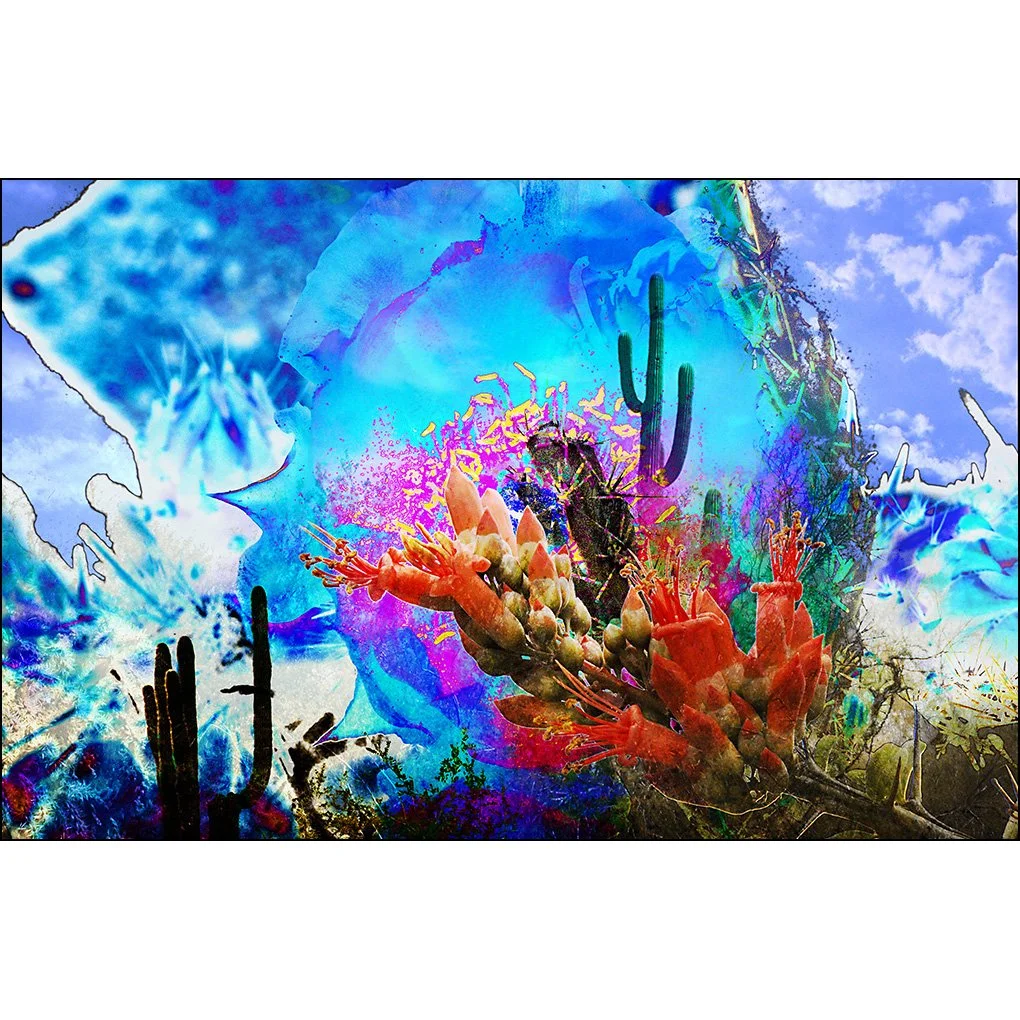 Image 2 of 5
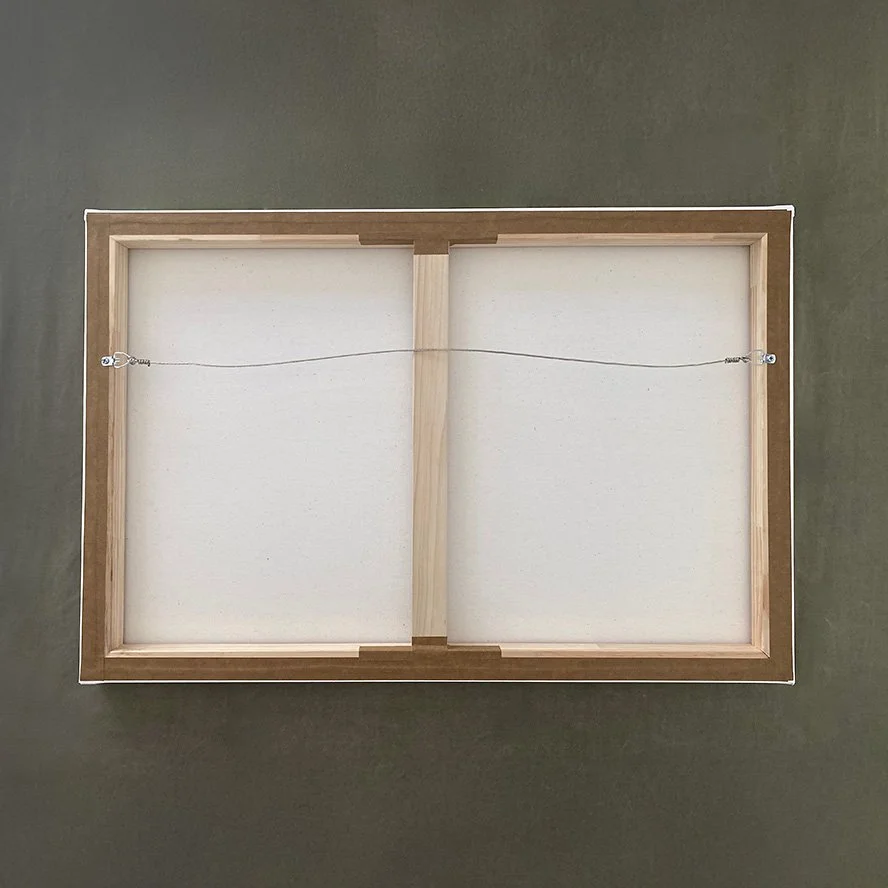 Image 3 of 5
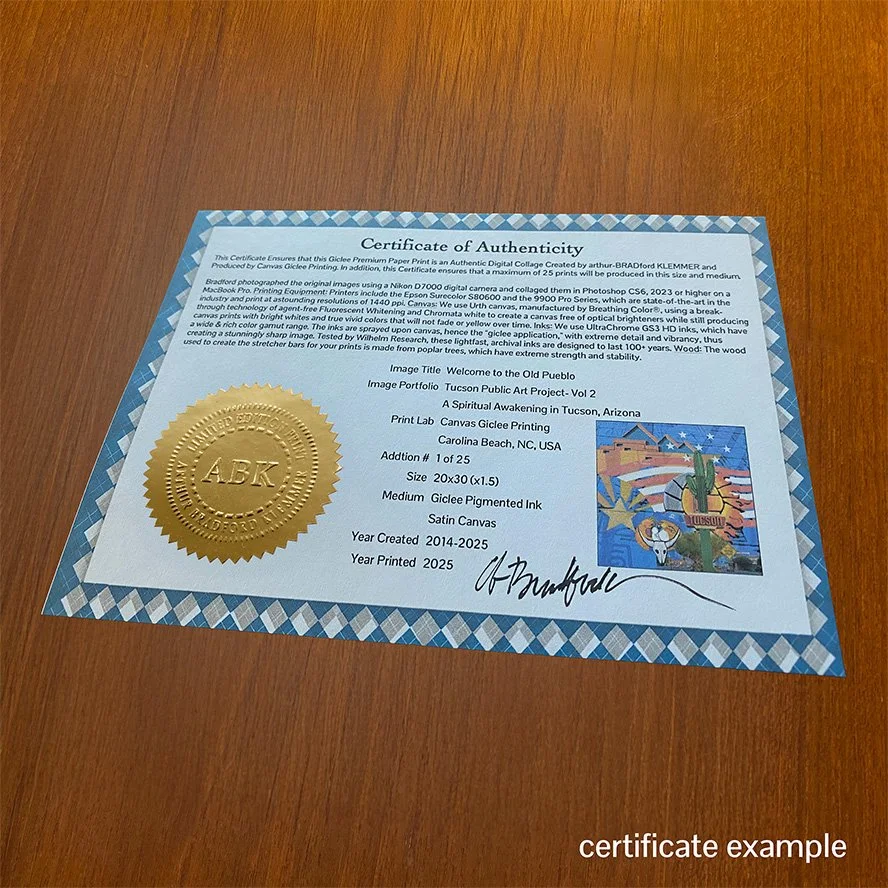 Image 4 of 5
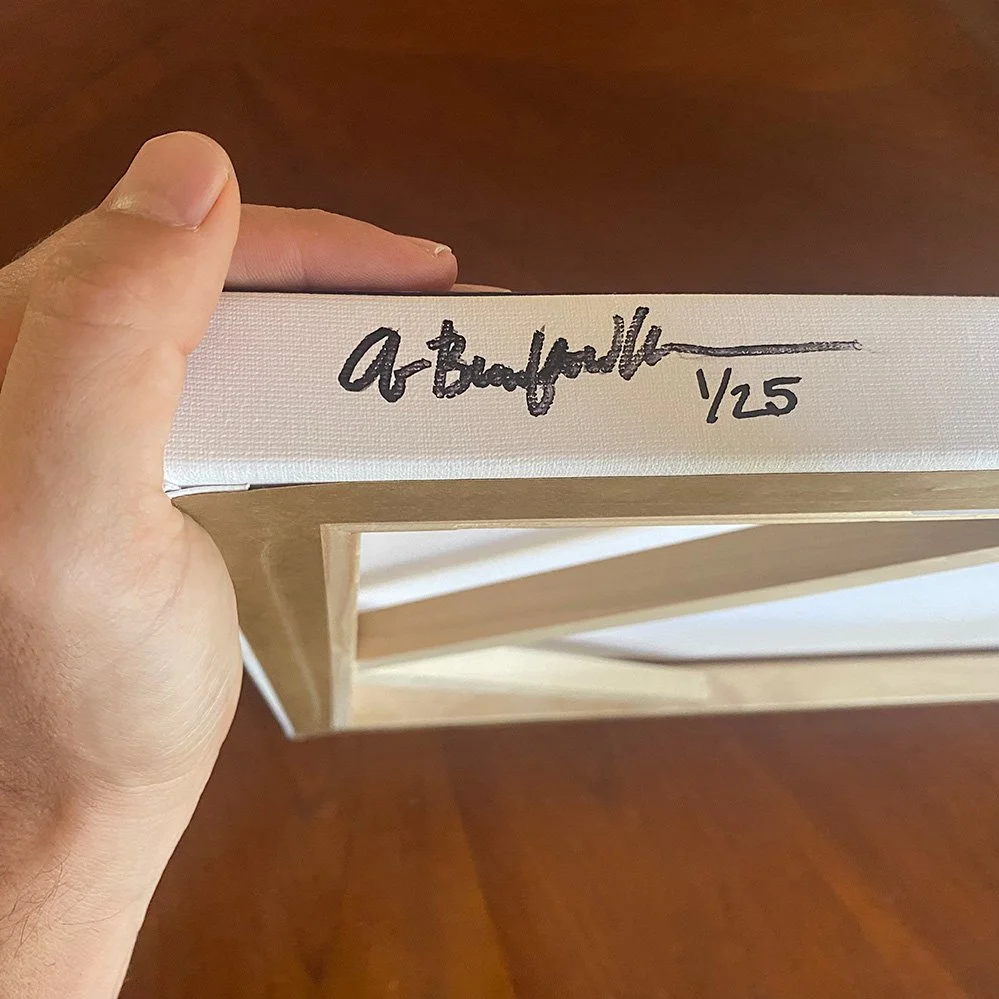 Image 5 of 5
Satisfaction Guaranteed
Your purchase is backed by a full refund for up to one year, provided the artwork is returned in excellent condition. You may also exchange it at any time for another available print of the same size, with only the return shipping cost required.
If your artwork arrives damaged, email me a photograph and return it within six weeks of purchase. I will replace it and reimburse your return shipping costs.
For additional peace of mind, all canvas and acrylic prints are insured in transit by the printing company. I want you to love and cherish your artwork, knowing that you own something rare, archival in quality, and deeply rich in symbolism and style.
Shipping
Because every limited edition is individually produced, each order undergoes a carefully managed process before shipment.
Printing, finishing, inspection, and professional packaging typically require approximately two weeks, although production times may vary slightly depending on current demand.
Once your artwork ships, you will receive a UPS tracking email so you can follow its journey to your home. Your hand-signed Certificate of Authenticity and handwritten thank-you note will be mailed separately to follow.
Print Quality Details
Every canvas limited edition is produced using a professionally color-managed, UV-curable pigment giclée process on archival matte fine-art canvas, faithfully preserving the intricate symbolism, subtle tonal relationships, and exceptional detail of the original artwork.
Professional color management, custom ICC profiles, premium UV-curable pigment inks, and archival-quality materials work together to ensure remarkable color fidelity and consistency from one print to the next.
I intentionally chose a matte canvas because its naturally low-reflective surface minimizes glare and distractions, allowing the artwork itself to remain the focus. Finished with clean white gallery edges and professionally stretched over sturdy wooden stretcher bars, each canvas arrives ready to display while offering a timeless presentation that beautifully complements both traditional and contemporary interiors.
Artwork Description and Symbolism
“I Am the Thickness of the Vegetation and the Depth of the Path Within Myself” is a visual reminder that inner growth rarely follows a straight line—it is a living ecosystem. In the broader spirit of The Desert Abstraction Project, the Sonoran Desert is not merely a place; it is a mirror for the soul’s journey. The deeper you go within, the more life you discover: more nuance, more truth, more responsibility, and more beauty. This piece captures that exact turning point—when the inner path stops feeling like a wide-open horizon and becomes a richly layered, meaning-filled terrain you must learn to navigate with presence.
The composition blooms with surreal intensity. A close-up cluster of red-orange cactus flowers—sharp, textured, and almost tactile—pushes forward like a declaration of vitality. Behind them, saguaro silhouettes rise in quiet witness, anchoring the scene in the unmistakable language of the desert. Yet the sky is transformed into something cosmic: electric blues and purples swirl into cloud-like, psychedelic fields of color, as if the outer landscape has become an X-ray of inner consciousness. The contrast is deliberate and powerful—warm blossoms against cool infinity—suggesting that the “thickness” you encounter on the inward path is not a problem to solve, but a richness to inhabit. This is the desert rendered as revelation: grounded in nature, expanded into spirit.
What makes the piece especially compelling is how it reframes difficulty as depth. Thick vegetation can slow you down, obscure the next step, and force you into attention—yet that same density is a sign of life returning. The title names a mature spiritual insight: when you stop skimming the surface of yourself, your inner world becomes more complex—and more alive. If you’re drawn to art that brings color, energy, and transcendence into your space while also supporting real personal growth, this work belongs where you’ll see it often. Collect it now as a daily visual practice—an anchor that reminds you your path is deepening, and your inner life is becoming fertile with meaning.
Accompanying Inspirational Exercise — “The Deepening Path Practice” (6 minutes, clarity through complexity)
Stand with the artwork and do a two-part scan—Vegetation and Path. First, focus on the vivid cactus flowers and ask: “What’s growing in me right now?” (a desire, a calling, a boundary, a new identity). Write one sentence. Next, shift your gaze to the layered, swirling blues and ask: “Where does my path feel dense or unclear?” Name it plainly—no drama, no self-judgment. Then complete this three-step sequence:
One Honest Admission: “The truth is, I’ve been avoiding ___.”
One Gentle Commitment: “For the next 24 hours, I will practice ___.” (one small action: a conversation, a pause before reacting, a walk without headphones, journaling for 5 minutes).
One Guiding Question: “If this density is growth, what is it trying to teach me?”
Close by saying: “I don’t need the whole map. I need the next true step.” Repeating this practice trains you to stop resisting complexity and start using it—turning “thickness” into discernment and a deeper path into a steadier, more conscious life.

!["I Am the Sixth Sense of My Mind’s Evolving Insight [Summer 1]" Limited Edition, UV-Curable Pigment Giclée Matte Canvas Print](https://images.squarespace-cdn.com/content/v1/649d1713c71e657c04fc689a/cded0072-d6f7-4626-8d9c-f4c5c785872a/Awakening+Art+with+Bradford+%7C+Desert+Abstraction+Project+Summer+1+I+Am+the+Sixth+Sense+of+My+Mind%E2%80%99s+Evolving+Insight+%7C+Canvas+Print+.jpg)

!["I Am the Reincarnations and Renewal of My Individual Being, United as One with All, God, The All [Spring 6]" Limited Edition, UV-Curable Pigment Giclée Matte Canvas Print](https://images.squarespace-cdn.com/content/v1/649d1713c71e657c04fc689a/5a22cb3c-6ebd-49fc-aff0-96b490bc5774/Awakening+Art+with+Bradford+%7C+Desert+Abstraction+Project+Spring+6+I+Am+the+Reincarnations+and+Renewal+of+My+Individual+Being%2C+United+as+One+with+All%2C+God%2C+The+All+%7C+Canvas+Print+.jpg)

!["I Am the Moonset, Acknowledging, Accepting, Reconciling and Growing From Past Mistakes [Autumn 1]" Limited Edition, UV-Curable Pigment Giclée Matte Canvas Print](https://images.squarespace-cdn.com/content/v1/649d1713c71e657c04fc689a/13329987-0ca3-427c-bafd-9cb1221bf3f6/Awakening+Art+with+Bradford+%7C+Desert+Abstraction+Project+Autumn+1+I+Am+the+Moonset%2C+Acknowledging%2C+Accepting%2C+Reconciling+and+Growing+From+Past+Mistakes+%7C+Canvas+Print+.jpg)

!["I Am the Monsoon Rain that Nourishes Me [Summer 4]" Limited Edition, UV-Curable Pigment Giclée Matte Canvas Print](https://images.squarespace-cdn.com/content/v1/649d1713c71e657c04fc689a/2e77240d-865c-4b34-9399-337881f90ae6/Awakening+Art+with+Bradford+%7C+Desert+Abstraction+Project+Summer+4+I+Am+the+Monsoon+Rain+that+Nourishes+Me+%7C+Canvas+Print+.jpg)

!["I Am the Desert, it’s Thirst, and it’s Refreshment [Summer 5]" Limited Edition, UV-Curable Pigment Giclée Matte Canvas Print](https://images.squarespace-cdn.com/content/v1/649d1713c71e657c04fc689a/ae72af6b-b154-4b36-9cc5-fb4d7fdac188/Awakening+Art+with+Bradford+%7C+Desert+Abstraction+Project+Summer+5+I+Am+the+Desert%2C+it%E2%80%99s+Thirst+and+it%E2%80%99s+Refreshment+%7C+Canvas+Print+.jpg)
