
The Tucson Public Art Project- Vol.1
Interstate 10- The Tucson Freeway
[portfolio revisions in progress]
Interstate 10: A Surreal Journey Into the Spirit of Tucson
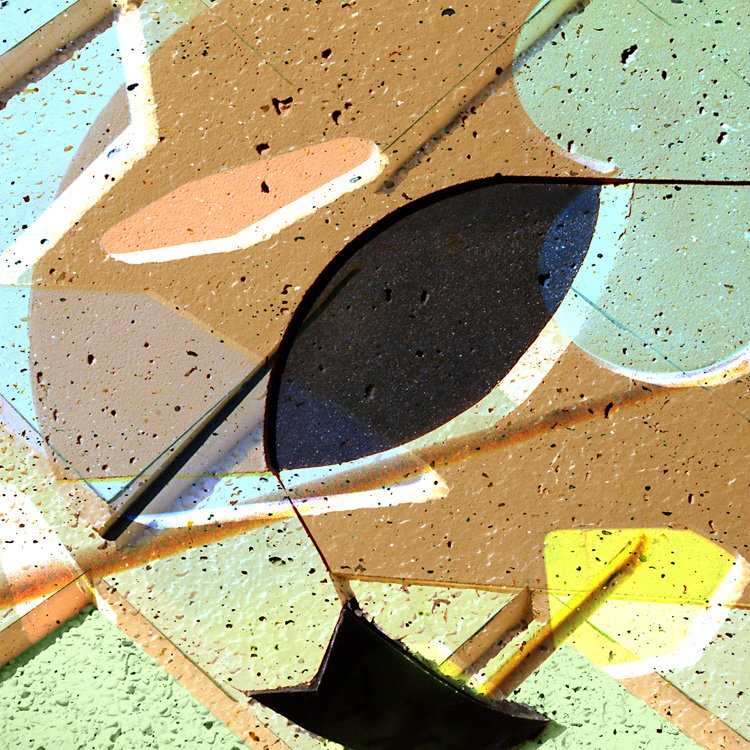
What if Tucson’s freeway system was more than infrastructure — what if it was a symbolic gateway into the psychology of the desert itself? Volume One of The Tucson Public Art Project transforms the public artwork woven throughout Interstate 10 into surreal digital collages that explore perception, symbolism, memory, and meaning. Sculptural retaining walls, mosaics, celestial motifs, desert wildlife, and Southwestern civic design become visual meditations on how human beings interpret reality through the lens of consciousness, emotion, and personal experience.
Part tribute to Tucson’s extraordinary public art movement and part psychological exploration, this evolving series invites viewers to rediscover familiar freeway corridors as portals of reflection, transformation, and imagination. Whether you are a longtime Tucson local, a desert traveler, or a collector drawn to symbolic contemporary art, these works are designed to bring both beauty and deeper contemplation into your space. Explore the collection, discover the hidden layers within each image, and collect a piece that resonates with your own journey — then return often as new works and revised editions continue expanding this growing visual map of the Old Pueblo.
[Read project bio below.]




-
![]()
Exit 244 Twin Peaks Overpass
-
![]()
Exit 244 Twin Peaks Overpass
-
![]()
Exit 254 Prince Rd Overpass
-
![]()
Exit 254 Prince Rd Overpass
-
![]()
Exit 255 Miracle Mile Overpass
-
![]()
Exit 255 Miracle Mile Overpass
-
![]()
Exit 256 Grant Rd Underpass
-
![]()
Exit 256 Grant Rd Underpass
-
![]()
Exit 257 Speedway Blvd Underpass
-
![]()
Exit 257 Speedway Blvd Underpass
-
![]()
Exit 257A St Mary’s Rd / 6th St Underpass
-
![]()
Exit 257A St Mary’s Rd / 6th St Underpass
-
![]()
Exit 258 Broadway Blvd / Congress St Underpass
-
![]()
Exit 258 Broadway Blvd / Congress St Underpass
-
![]()
Cushing St Overpass
-
![]()
Cushing St Overpass
-
![]()
Exit 259 22nd St/ Star Pass Blvd Underpass
-
![]()
Exit 259 22nd St/ Star Pass Blvd Underpass
-
![]()
Exit 259A 29th St / Silverlake Rd Underpass
-
![]()
Exit 259A 29th St / Silverlake Rd Underpass
-
![]()
Exit 260 I10/I19 Junction
-
![]()
Exit 260 I10/I19 Junction
-
![]()
Exit 261 6th Ave Overpass
-
![]()
Exit 261 6th Ave Overpass
-
![]()
Exit Out West Where Life Begins New
-
![]()
Exit Out West Where Life Begins New




About the Project
Every city carries an inner psychology hidden beneath its streets, symbols, architecture, and public spaces. The Tucson Public Art Project is my attempt to reveal that invisible landscape through digital collage art — transforming Tucson’s murals, sculptures, freeway installations, decorative masonry, and neighborhood landmarks into visual meditations on self-awareness, healing, and spiritual awakening.
Created from my own photography and reconstructed through elaborate Photoshop collage techniques, this three-volume series celebrates Tucson not only as my hometown but as a living work of art. The project is rooted in the belief that public art has the power to do more than beautify a city; it can mirror the inner life of the people who move through it every day.
From the freeway corridors of Interstate 10 to the symbolic landmarks scattered throughout the Greater Tucson Area and the cultural heartbeat of Downtown, each piece invites viewers to experience Tucson through two lenses at once: the physical landscape of the Old Pueblo and the deeper psychological landscape within themselves.
The result is both a tribute to Tucson’s artistic community and a symbolic journey through perception, identity, transformation, and self-realization.
Volume One — Interstate 10
(Currently Being Revised)
Volume One functions as an arrival sequence into Tucson — as though the viewer has just taken an off-ramp into an open-air gallery stretching across the Sonoran Desert.
Centered on the Interstate 10 corridor running through Pima County, this chapter explores the remarkable public artwork integrated into Tucson’s freeway infrastructure: sculptural retaining walls, mural installations, stamped concrete, ceramic tile mosaics, landscape architecture, and symbolic Southwestern design woven directly into the transportation system itself. Many of these installations were created through collaborations between the Arizona Department of Transportation, Pima County, landscape architecture firms, community organizations, and local artists.
The visual language of the freeway repeatedly returns to themes of desert ecology, Indigenous agricultural symbolism, astronomy, migration, wildlife, neighborhood identity, and cultural memory. Rather than treating infrastructure as anonymous concrete, Tucson transformed its freeway system into a reflection of regional identity and spiritual atmosphere.
This volume explores not only the intended meanings of these works but also the deeply personal ways in which human beings interpret symbols through their own experiences, fears, hopes, and memories. Original photographs are digitally dissected, reconstructed, layered, abstracted, and reimagined into surreal visual narratives that ask deeper questions:
How do we assign meaning?
What shapes perception?
How much of reality do we actively create within our own minds?
As I continue revising this chapter through a stronger application of the Principles of Art and Design, the work is becoming more immersive, emotionally resonant, and visually cohesive — transforming familiar freeway landmarks into portals of reflection and psychological symbolism.
Volume Two — The Greater Tucson Area
(Currently Being Revised)
If Volume One represents arrival, Volume Two represents awakening.
Expanding outward from Midtown Tucson through Marana, Oro Valley, the Catalina Foothills, the East Side, South Side, and beyond, this chapter transforms the Greater Tucson Area into a symbolic map of consciousness and inner healing.
Each artwork functions like a psychological waypoint along the spiritual journey of the Self.
Pieces such as Old Pueblo, Dreams, Solar Illumination, Triple Supermoon Light, and Starlight explore inspiration, cosmic perspective, hope, and the hidden beauty woven into everyday life.
Works like Logic and Intuition examine the sacred tension between analytical reasoning and inner knowing, while Introspection turns inward toward shadow work, self-reflection, and emotional honesty.
The paired works Artificial Matrix and Natural Matrix contrast systems of fear, division, overstimulation, and disconnection against the deeper intelligence of nature, unity, authenticity, and spiritual alignment.
Other works, including Knowledge is Liberation, Desire, Non-Attachment, Gratitude, and Love Thyself, explore themes of self-worth, consciousness, free will, psychological healing, and the ongoing human choice between fear and love.
Throughout this volume, Tucson’s public artwork becomes more than scenery; it becomes symbolic architecture for the inner world. Murals, sculptures, desert landscapes, sacred geometry, celestial imagery, and layered visual metaphors merge together into compositions designed to encourage deeper self-awareness and compassion.
At its core, Volume Two explores the relationship between the microcosm of the Self and the macrocosm of Divinity — the idea that the same creative intelligence shaping the universe also lives within us. Each piece asks the viewer not merely to observe the artwork, but to participate in it emotionally, psychologically, and spiritually.
Volume Three — Downtown
(Coming)
The final chapter of the Tucson Public Art Project will move into the historic and cultural heart of Tucson itself.
While the earlier volumes focus heavily on personal perception and inner awakening, Volume Three will explore collective humanity — the invisible threads that unite communities, cultures, generations, and spiritual traditions across time.
Downtown Tucson carries a unique artistic energy shaped by Indigenous history, Mexican heritage, desert architecture, grassroots creativity, music, activism, local businesses, and an enduring sense of authenticity. This closing volume will focus on the emotional and spiritual character that makes Tucson feel unmistakably human.
It will also serve as the culmination of the project’s larger message:
that beneath all divisions, every person longs for meaning, connection, creativity, and belonging.
Why I Make This Work
I create these collages to function as more than decorative artwork.
Each piece is designed to operate as a visual practice — something that quietly reminds the viewer to pause, breathe, reflect, reconnect with themselves, and approach life with greater compassion and awareness.
Over the past decade, alongside creating art, I have immersed myself in the study of metaphysics, psychology, philosophy, meditation, symbolism, and spiritual traditions from around the world. Those influences naturally found their way into my creative process. The longer viewers spend with the work, the more symbolic “Easter eggs” and hidden layers begin to reveal themselves.
Many of my collectors are thoughtful, spiritually curious people balancing busy modern lives with a deeper desire for meaning and authenticity. For them, the artwork becomes more than an image on a wall — it becomes an emotional anchor, a conversation piece, and a daily reminder of their own inner growth.
Invitation
The Tucson Public Art Project continues to evolve as both my artistic voice and understanding of visual storytelling deepen.
I am currently revising many of the earlier works from Volumes One and Two through a more refined application of the Principles of Art and Design studied extensively during the summer of 2025, allowing each composition to communicate more clearly, feel more immersive, and carry greater emotional resonance.
Whether you are a Tucson local recognizing familiar streets and landmarks, a visitor discovering the spirit of the Sonoran Desert, or a seeker, anywhere in the world, drawn to symbolic and spiritually inspired artwork, I invite you to experience these pieces slowly and return often.
New works, revisions, and future installments are continually in development.
If a particular image speaks to something within you now, trust that feeling. Bring the piece into your space as a daily reminder of beauty, awareness, and the deeper journey unfolding beneath ordinary life — and return later to continue exploring the expanding story of the Tucson Public Art Project.

Overview:
Between Exit 244 (Twin Peaks Road/Marana) and Exit 261 (6th Avenue/Downtown Tucson), the freeway corridor through Pima County functions almost like a linear public-art gallery. Much of the artwork was commissioned through collaborations among the Arizona Department of Transportation (ADOT), Pima County, the City of Tucson, landscape architecture firms, public art programs, and local artists. Many installations combine transportation infrastructure with Southwestern storytelling, astronomy, desert ecology, neighborhood history, and Indigenous symbolism. A major goal was “context-sensitive design”—making each interchange reflect the surrounding neighborhood, ecology, or cultural history rather than relying on generic highway infrastructure.
Tucson has become nationally recognized for integrating public art into its freeway infrastructure more extensively than most American cities, transforming transportation corridors into expressions of regional identity and cultural storytelling. Throughout the I-10 corridor in Pima County, recurring artistic themes include Sonoran Desert ecology, Indigenous agriculture, astronomy, migration, wildlife, water systems, neighborhood identity, and collective cultural memory. These projects have been funded and coordinated through collaborations between organizations such as the Arizona Department of Transportation, Pima County, Arts Foundation for Tucson and Southern Arizona, and Pima Association of Governments. The corridor’s artistic character is defined through techniques such as ceramic tile mosaics, photographic tile transfers, colored and stained concrete, sculptural retaining walls, stamped concrete textures, integrated landscape architecture, transportation-themed civic design, and collaborative community painting projects.
Interstate 10- The Tucson Freeway
-
The I-10 / Twin Peaks Road interchange at Exit 244 in Marana was conceived as a large-scale work of integrated public art, where landscape architecture, structural engineering, and architectural detailing combine to create a symbolic gateway into the Sonoran Desert. Designed by Wheat Design Group (now Wheat, a J2 Design Studio), the project incorporates earth-toned bridge architecture, decorative metal railings and barriers, sculptural retaining walls, native desert landscaping, and carefully shaped landforms into a unified visual composition. Rather than relying on painted murals or figurative imagery, the interchange uses the materials of infrastructure itself—steel, concrete, stone, and desert vegetation—as its artistic palette. (Wheat, a J2 Design Studio)
The symbolism of the design is rooted in movement, connection, and place. The sweeping steel-and-concrete structures spanning Interstate 10 and the Union Pacific Railroad evoke the historic transportation corridors that have shaped Southern Arizona, from Indigenous trade routes and railroads to modern interstate travel. The sculptural metalwork and architectural treatments introduce rhythm and visual texture while reinforcing themes of strength, endurance, and progress. These structural elements are balanced by salvaged native vegetation, landscaped medians, and erosion-shaped landforms that visually reconnect the interchange to the surrounding desert. Together, the hard geometry of the metal and concrete infrastructure and the organic forms of the Sonoran landscape create a dialogue between human ingenuity and the natural environment. (Wheat, a J2 Design Studio)
Completed in 2010 as the first finished Regional Transportation Authority (RTA) project in Pima County, the Twin Peaks interchange stands as an early example of Tucson-area transportation art, where engineering and aesthetics are inseparable. Its artistic achievement lies not in a single mural or sculpture, but in the way its architectural metalwork, bridge structures, landscape design, and desert restoration function together as a cohesive civic landmark that marks the transition between suburban development and the open landscapes of Marana and the Avra Valley. (Wheat, a J2 Design Studio)
-
At present, there is no freeway artwork at this exit, except for the artistic plaque commemorating the farmers of Marana, Avra Valley, and the local area, where it sits, though it is now the suburbs, on the north side of Cortaro, West of I-10. Artwork shown in self-portrait above.
-
The rebuilt I-10 / Ina Road interchange at Exit 248 was designed as a symbolic gateway between urban Tucson and the open Sonoran Desert landscapes of Oro Valley and Marana. Completed in 2019 through a partnership between ADOT, the Regional Transportation Authority, and Sundt Construction, the project combined elevated bridge architecture, desert landscaping, decorative infrastructure treatments, and sculpted grading into a unified environmental design.
The symbolism of the interchange centers on movement, transition, and harmony with the desert landscape. The sweeping bridge geometry echoes the surrounding mountain horizons and historic transportation corridors that shaped Southern Arizona — Indigenous pathways, rail travel, river crossings, and modern interstate movement. Layered desert-toned materials, native landscaping, and restrained metal and structural elements soften the interchange's industrial scale, creating an atmosphere of openness, continuity, and environmental integration rather than monumental spectacle. Like the nearby Twin Peaks interchange, its artistic language relies more on landscape architecture and spatial experience than explicit murals or figurative public art. However, unlike the other, there’s really not much to say about this over-simplified design work, and since this is my side of town, I wish I had more to tell you; to be honest, the artistry on I-10 at Ina is rather disappointing.
Although no publicly documented muralist or standalone sculptor has been identified specifically for Exit 248, the project clearly involved multidisciplinary collaboration between transportation engineers, landscape architects, and aesthetic-design consultants working within Tucson’s broader freeway-art tradition — where infrastructure itself becomes symbolic public art through desert integration, architectural styling, and carefully composed civic space.
-
The recently reconstructed I-10 / Orange Grove Road interchange at Exit 250 now incorporates a repeating hummingbird motif, molded and painted directly into portions of the concrete infrastructure — one of the clearest examples along this corridor of symbolic imagery intentionally embedded into the freeway architecture itself. Although ADOT’s public documents focus primarily on transportation and safety improvements, project imagery and public commentary surrounding the 2023–2025 reconstruction show decorative concrete treatments featuring stylized hummingbird forms integrated into retaining walls and bridge surfaces.
Hummingbird symbolism is especially fitting in the Sonoran Desert context. In Southwestern and Indigenous symbolism, hummingbirds commonly represent resilience, migration, adaptability, energy, joy, and the ability to thrive in harsh environments — themes that parallel both desert ecology and the nonstop movement of interstate travel. Their rapid motion and hovering flight visually echo the interchange itself: a layered network of flowing traffic, converging pathways, and suspended movement above washes and rail corridors. Repeating the hummingbird form rhythmically across the molded concrete transforms the freeway walls into a kind of animated desert pattern language, softening the industrial scale of the interchange while reinforcing a connection to native wildlife and regional identity. The artwork functions less as a standalone mural and more as an integrated environmental symbol woven directly into the infrastructure.
The interchange reconstruction was carried out under ADOT and the Regional Transportation Authority as part of the larger I-10 widening project between Ina and Ruthrauff Roads, with Sundt Construction serving as a major construction partner on nearby corridor improvements. Publicly available records do not currently identify a specific muralist, sculptor, or standalone metal artist associated exclusively with Exit 250, suggesting the work likely emerged from a multidisciplinary collaboration between transportation architects, landscape architects, structural designers, and aesthetic-treatment consultants rather than a single, standalone public artist.
-
Item descriptionResearch into Exit 251 (Sunset Road) reveals that this location differs from the older Ina, Orange Grove, and Twin Peaks interchanges because it is an entirely new interchange and regional corridor connection, completed as part of the I-10 widening project between Ina and Ruthrauff Roads. The project was developed through a partnership between ADOT, Pima County, the Regional Transportation Authority (RTA), the City of Tucson, and engineering firms, including CONSOR Engineers and Kimley-Horn. Construction of the combined Sunset Road and I-10 corridor improvements was performed by Granite Construction under ADOT’s larger $171 million freeway reconstruction project. (Pima County, Arizona)
From an artistic perspective, the symbolism of the Sunset interchange centers on connection and convergence. Unlike the Orange Grove hummingbird motifs or the environmentally focused Twin Peaks interchange, Sunset Road physically links transportation systems that had long remained separated: Interstate 10, the Union Pacific Railroad, the Rillito River corridor, the Santa Cruz River corridor, regional bicycle trails, and growing northwest Tucson communities. The elevated bridges crossing the freeway, railroad, and river create a visual metaphor for overcoming barriers and reconnecting fragmented landscapes. The sweeping bridge forms, landscaped medians, shared-use paths, and river crossings emphasize movement, accessibility, and regional unity. The project’s artistic language is therefore less about decorative imagery and more about the symbolic act of linking previously disconnected places and people. (Pima County RTA)
The most significant public-art component associated with the Sunset Road project is a dedicated public-art commission planned for a 230-foot-long gabion wall beneath the Sunset Road bridge along the Chuck Huckelberry Loop. The Arts Foundation for Tucson and Southern Arizona issued a call for a public artist or artist team with a $95,000 budget to create a permanent installation at this location. While the selected artist and final artwork are not clearly documented in publicly available records, the commission confirms that public art was intentionally incorporated into the project rather than added as an afterthought. The combination of engineered infrastructure, landscape architecture, river crossings, and commissioned public art makes the Sunset interchange one of the strongest examples along the I-10 corridor of transportation infrastructure functioning simultaneously as civic design, regional gateway, and symbolic public artwork. (artsfoundtucson.org)
-
The freeway art at I-10 Exit 254 (Prince Road) is one of the most culturally explicit and community-focused public-art installations along the Tucson freeway corridor. As part of the Prince Road interchange reconstruction completed in 2014, local artist Gregory D. Schoon (often known as Greg Schoon) was selected through the Tucson Pima Arts Council public-art process to create a series of large-scale images integrated into the interchange walls. His work depicts a mariachi musician, a folklórico dancer, a Tohono O'odham basket weaver, and a Pascua Yaqui deer dancer—figures chosen to represent the diverse cultural traditions that have shaped Tucson and Southern Arizona. The imagery repeats along multiple walls, transforming the interchange into a visual celebration of regional identity rather than merely a transportation structure. (publicartarchive.org)
Symbolically, the artwork serves as a bridge between communities, cultures, and generations. The mariachi musician and folklórico dancer honor Tucson's deep Mexican heritage, while the basket weaver and Yaqui deer dancer recognize the enduring presence and traditions of Indigenous peoples whose history predates the city itself. Rather than depicting landscapes or abstract patterns, Schoon's imagery places people at the center of the interchange, emphasizing that Tucson's identity is rooted not only in the desert environment but also in the cultural practices, artistry, and stories of its residents. The repeated figures create a rhythmic procession along the freeway walls, turning everyday travel into a reminder of the region's living cultural heritage. (publicartarchive.org)
While the interchange itself was constructed as part of ADOT's I-10 widening project, the public art component was administered by the Tucson Pima Arts Council. Publicly available records identify Greg Schoon as the artist, but do not clearly document separate subcontracted muralists, metal artists, or landscape architects specifically associated with the artwork. Unlike nearby interchanges that rely heavily on landscape architecture or decorative concrete, Prince Road stands out for its figurative storytelling and its role as a cultural gateway into Tucson. (Arizona Department of Transportation)
-
The most significant public artwork associated with I-10 Exit 255 (Miracle Mile Road) is a remarkable series of six monumental mosaic murals created in 1995 by Tucson artist Gary Mackender. Installed along the retaining walls near the Miracle Mile interchange, the murals are composed of approximately 18,000 individually hand-painted ceramic tiles, making them among the largest and most ambitious mosaic works incorporated into Tucson's freeway-art system. Each tile was painted by hand and assembled into large-scale compositions that transform what would otherwise be ordinary transportation infrastructure into a permanent civic artwork. Decades later, the murals were deemed important enough to undergo a major conservation and restoration effort, ensuring their preservation for future generations. (IMDb)
The symbolism of the murals is deeply connected to Miracle Mile's historic role as Tucson's northern gateway. Before Interstate 10 became the region's primary transportation artery, Miracle Mile served as the main arrival corridor for travelers entering Tucson along U.S. Highways 80, 84, and 89. In many ways, Mackender's use of thousands of individual tiles mirrors the countless individual journeys, stories, and cultures that have converged here over time. Each painted tile contributes a small piece to a much larger image, symbolizing how Tucson itself was built through the accumulation of many people, traditions, and experiences. The mosaic medium reinforces themes of connection, community, and collective identity, while the murals' prominent location along a major transportation corridor celebrates movement, arrival, and the city's long history as a crossroads of the Southwest. (IMDb)
Within the broader context of Tucson's nationally recognized freeway-art program, the Miracle Mile mosaics stand apart for their craftsmanship and permanence. Whereas many freeway-art projects rely on painted murals, decorative concrete, or architectural treatments, Mackender's work transforms nearly 18,000 hand-painted tiles into a durable visual narrative embedded directly into the city's infrastructure. The result is both a work of public art and a symbolic gateway, welcoming travelers while preserving a tangible piece of Tucson's cultural memory. (IMDb)
-
The I-10/Grant Road interchange at Exit 256 features a coordinated series of decorative concrete reliefs that transform the retaining walls and bridge structures into a symbolic representation of the Sonoran Desert watershed. Cast directly into the concrete, the artwork features a large, soaring hawk, stylized desert flowers, textured, rock-like surfaces, and sweeping blue ribbon-like forms woven throughout the interchange's architecture. Rather than functioning as separate murals, these elements are integrated into the structure itself, reflecting Tucson’s long-standing approach of embedding public art into transportation infrastructure. The interchange was reconstructed as part of the Regional Transportation Authority’s Grant Road Improvement Project through a collaboration between ADOT, the City of Tucson, engineers, landscape architects, and public-art consultants.
The symbolism appears to center on the relationship between sky, water, land, and life in the Sonoran Desert. The hawk serves as the dominant visual element and can be interpreted as a symbol of vision, awareness, freedom, and stewardship over the landscape below. The stylized flowers represent the bursts of beauty and renewal that emerge following seasonal rains, while the textured reliefs evoke the rocky terrain, washes, and canyon walls that characterize Southern Arizona. Most distinctive are the flowing blue forms that move through the composition like currents, suggesting the Santa Cruz River, desert washes, monsoon runoff, and the life-giving role of water in an arid environment. Their curving shapes create a sense of movement through the otherwise rigid geometry of the freeway, visually connecting the various elements into a unified ecological narrative.
Together, the imagery tells a story about the forces that have shaped Tucson for centuries. Water carves the land, the desert blooms when conditions are right, and the hawk watches from above as both wildlife and people move through the region’s interconnected corridors. Unlike the culturally focused artwork at Prince Road or the historic mosaics at Miracle Mile, the Grant Road interchange focuses on the natural systems underlying life in the Sonoran Desert. The result is a symbolic gateway that celebrates the Santa Cruz watershed, the resilience of desert ecosystems, and the enduring relationship between movement, landscape, and place in Southern Arizona.
-
The artwork at the I-10/Speedway Boulevard underpass (Exit 257) is one of Tucson’s most distinctive freeway art installations, using astronomy as a metaphor for exploration, memory, and humanity’s connection to the larger universe. Developed as part of the I-10 reconstruction project and designed in collaboration with transportation planners, public-art specialists, and landscape architects, including Carol Clement of Wheat Scharf Associates (now Wheat Design Group), the underpass incorporates large-scale astronomical imagery inspired by Tucson’s internationally recognized role in astronomical research and observation.
The symbolism centers on the night sky and Tucson’s longstanding relationship with scientific discovery. Drawing inspiration from the region’s observatories and dark-sky heritage, the artwork transforms the underpass into a symbolic portal between Earth and the cosmos. One of the most meaningful references is the constellation Cassiopeia, whose light remains visible thousands of years after the original stellar event. During the design process, this idea became a metaphor for endurance, legacy, and the way beauty and influence can continue long after their source has passed. The celestial imagery encourages travelers to look beyond the immediate concerns of daily life and consider their place within a much larger continuum of time and space.
Rather than celebrating transportation itself, the Speedway artwork celebrates curiosity, wonder, and humanity’s desire to understand the universe. The stars, galaxies, and astronomical references create a sense of infinite scale that contrasts with the confined space of the underpass, transforming an ordinary piece of infrastructure into a place of reflection. The result is a powerful visual reminder that Tucson is shaped not only by its desert landscape but also by its unique role in helping humanity explore the mysteries of the cosmos.
-
The artwork at the I-10 / St. Mary’s Road underpass (Exit 257A) is one of Tucson’s most meaningful examples of community-based public art. Completed in 2009, the project was created by Tucson artist Stephen Farley using his innovative Tilography™ process, which converts photographs into large-scale glazed ceramic tile murals. The installation consists of ten mural panels featuring historic family photographs gathered from residents of Barrio Anita and Barrio Hollywood, along with neighborhood scenes photographed by David Sanders. The murals were fabricated through the collaboration of Farley, tile artists Rick Young and Tom Galloway of Tilography LLC, and the Kiewit–Sundt Joint Venture that constructed the I-10 reconstruction project. (Public Art Archive)
The symbolism of the artwork centers on community, memory, and belonging. Rather than depicting famous historical figures or grand events, the murals celebrate ordinary people whose lives shaped Tucson’s west side. Among the images are members of the Pesqueira family, founders of the Grande Tortilla Factory, neighborhood elders, families, and scenes of everyday life. Farley intentionally chose photographs that reflected the values repeatedly expressed by residents during the community-engagement process: faith, family, hard work, cultural heritage, and pride of place. By embedding these images into permanent ceramic tile, the project transforms the underpass into a visual bridge connecting neighborhoods separated by the interstate while preserving memories that might otherwise fade with time. (https://www.kold.com)
The use of glazed ceramic tile is itself symbolic. Thousands of individual tiles combine to form larger portraits, mirroring the way individual lives come together to create a community. As travelers pass beneath the freeway, they encounter not abstract decoration but the faces and stories of the people who built these neighborhoods. The result is a powerful monument to cultural continuity and collective memory, turning a transportation corridor into a place where Tucson’s local history remains visible, personal, and enduring. (Tilography)
-
The I-10 / Broadway Boulevard–Congress Street interchange at Exit 258 functions as one of Tucson’s most recognizable civic gateways, blending transportation infrastructure with architectural and landscape-based public art. Sculpted and painted concrete reliefs, integrated directly into the retaining walls and structural surfaces, depict desert cacti, cactus blossoms, and other organic desert forms. These decorative elements are paired with textured concrete finishes, desert-inspired color palettes, landscape treatments, and a series of illuminated decorative light strands that transform the interchange into a striking nighttime landmark. Developed as part of the broader downtown I-10 reconstruction effort, the project involved collaboration among ADOT, transportation engineers, architects, landscape architects, and urban design consultants to create an arrival experience that reflected Tucson’s desert character and regional identity.
The symbolism of the interchange centers on the relationship between the city and the desert environment that sustains it. The cactus imagery serves as a visual expression of endurance, adaptation, and life in an arid climate, while the blossoms symbolize renewal, seasonal transformation, and the fleeting beauty that emerges from harsh conditions. The sculpted textures and layered reliefs further evoke the geology, washes, and natural contours of the surrounding desert basin, grounding the urban gateway within the broader Sonoran landscape. Rather than telling a specific historical narrative, the artwork celebrates the ecological foundations of Tucson itself.
At night, the illuminated decorative light strands introduce a contemporary layer of symbolism. Their glowing linear patterns suggest movement, connection, and converging pathways, echoing the flow of people, commerce, and ideas through the heart of the city. Together with the sculpted desert imagery, the lighting transforms the interchange into a ceremonial threshold between landscape and city, nature and development. The result is an integrated civic design work that celebrates arrival, connectivity, and Tucson’s enduring relationship with the desert environment, which continues to shape its identity.
More coming soon.